
Last updated September 10, 2026
Level 1 sweep and inspection to the NFPA 211 annual standard - flue, crown, cap, and flashing checked and photographed
Chimney sweep logs do not sweep chimneys. They loosen some creosote - which then falls where a brush and vacuum still have to collect it.
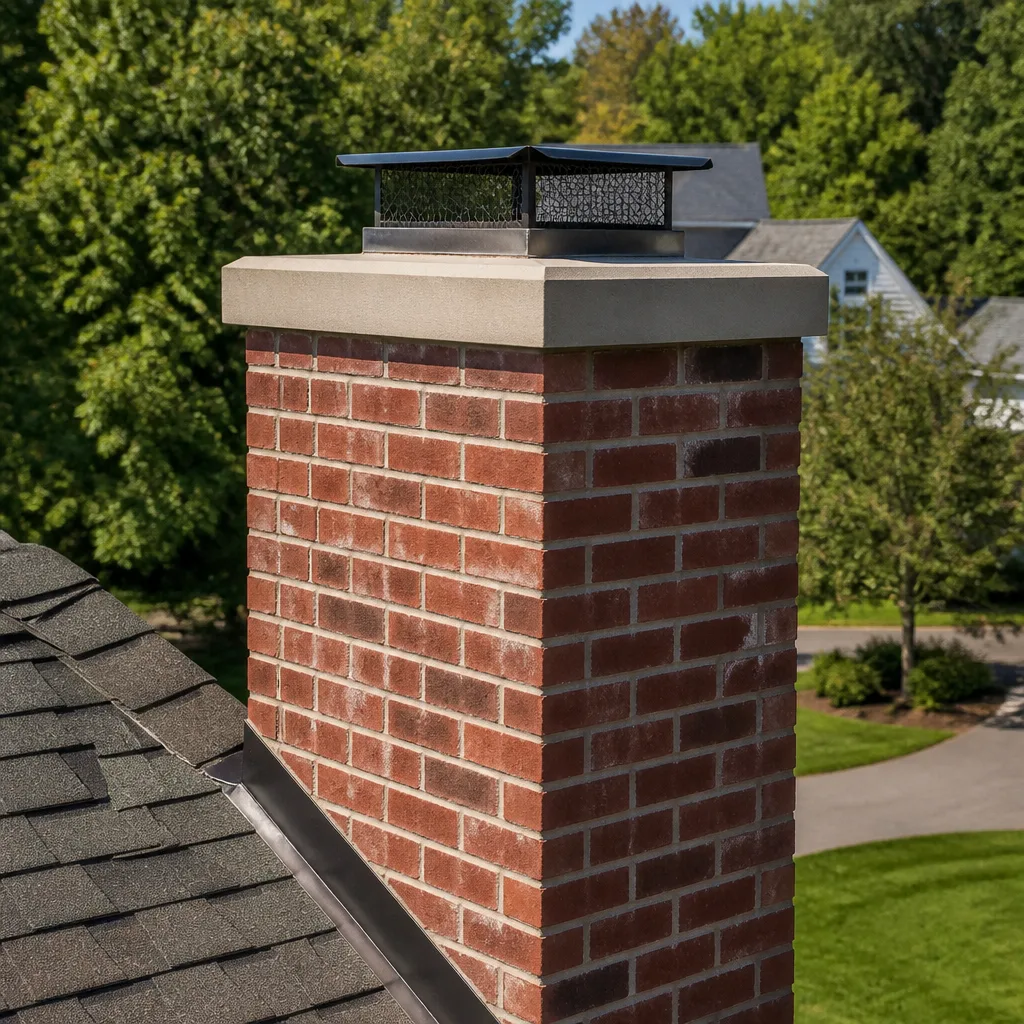
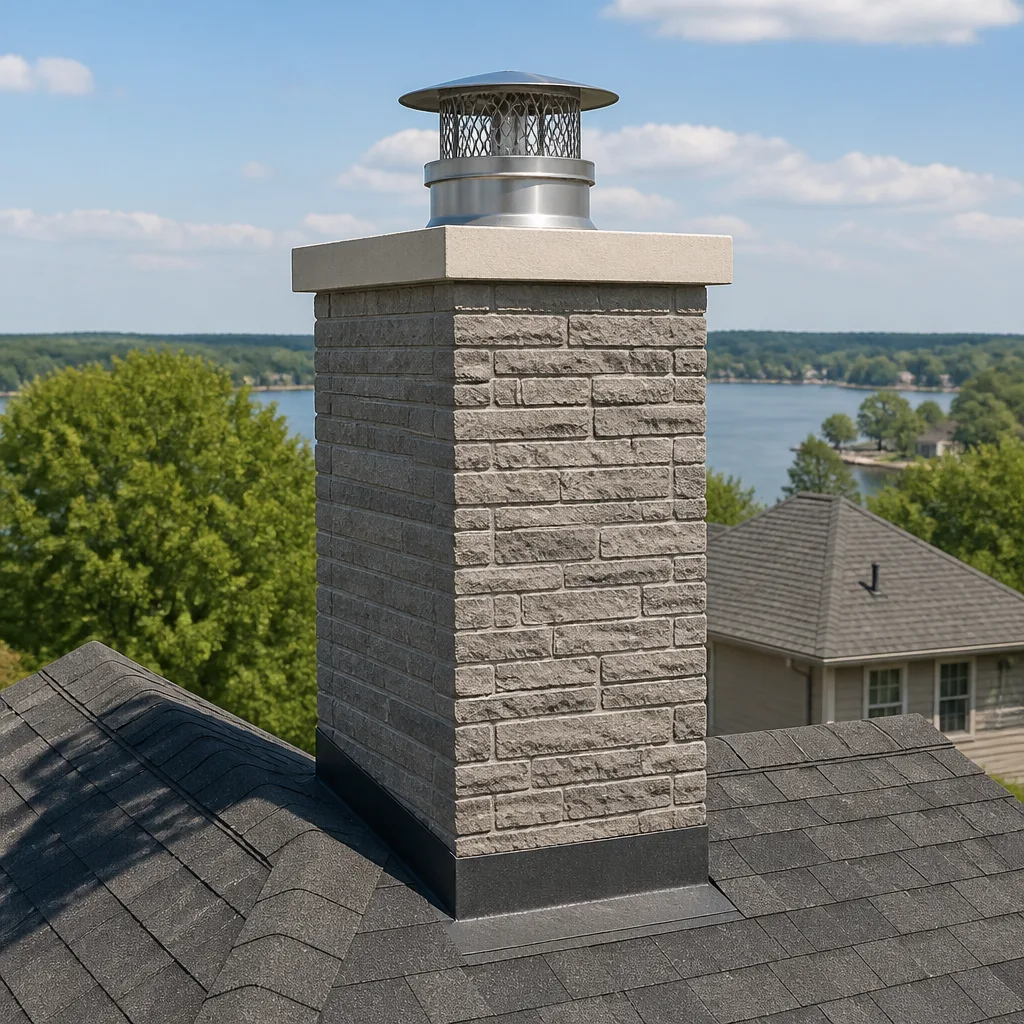
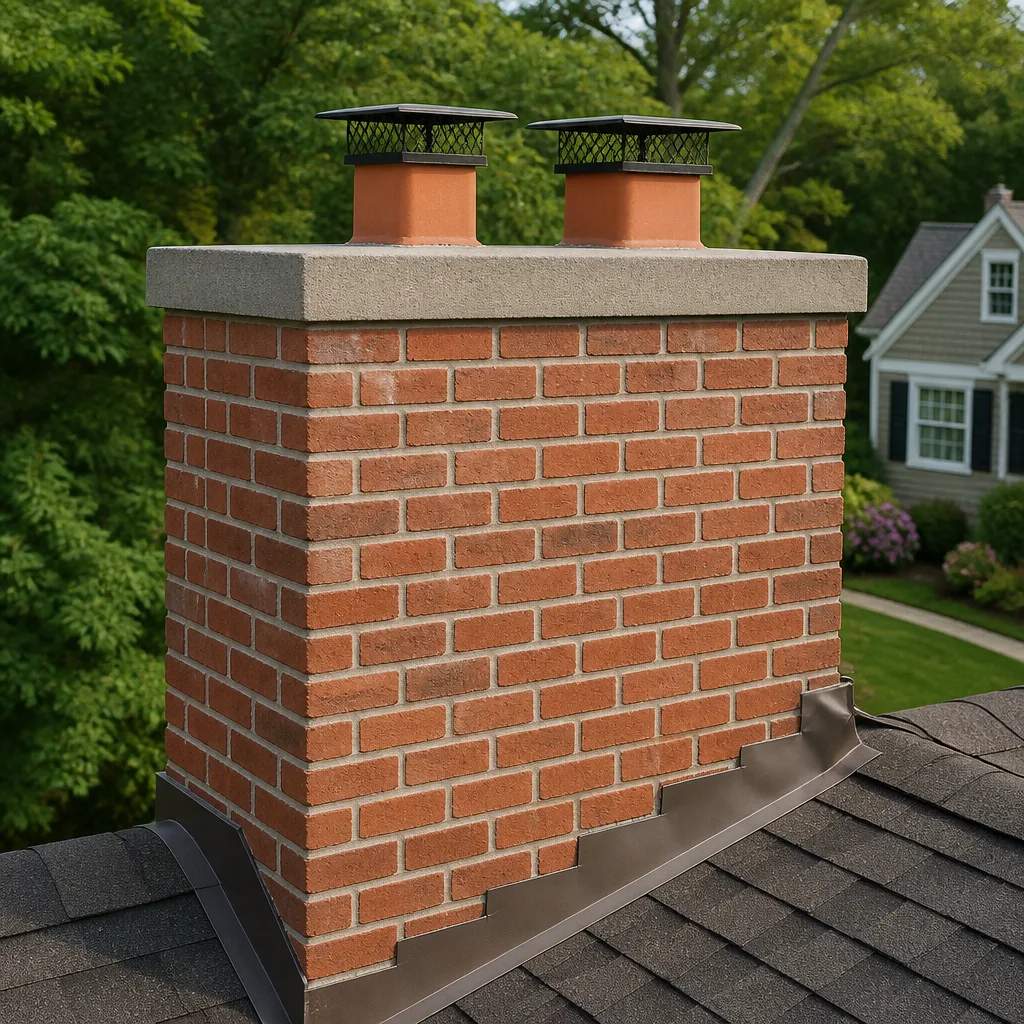
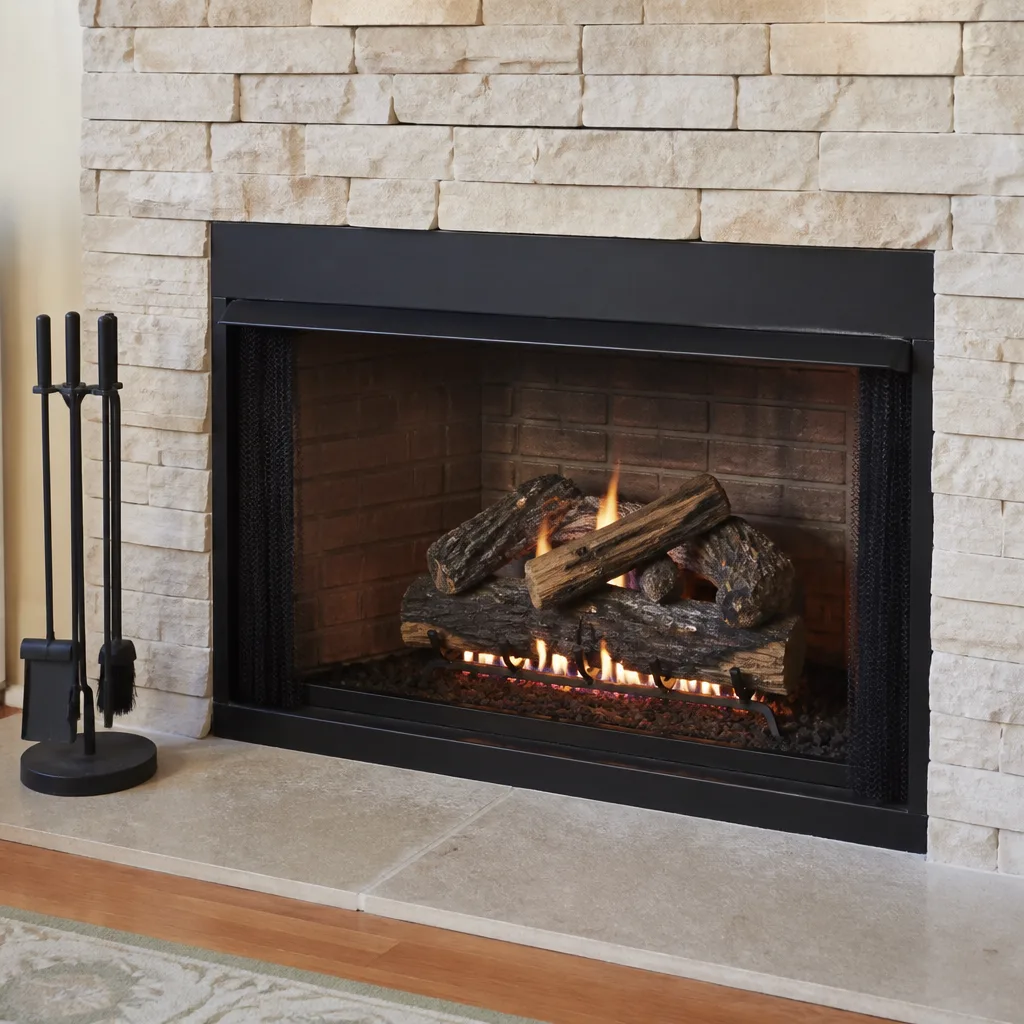
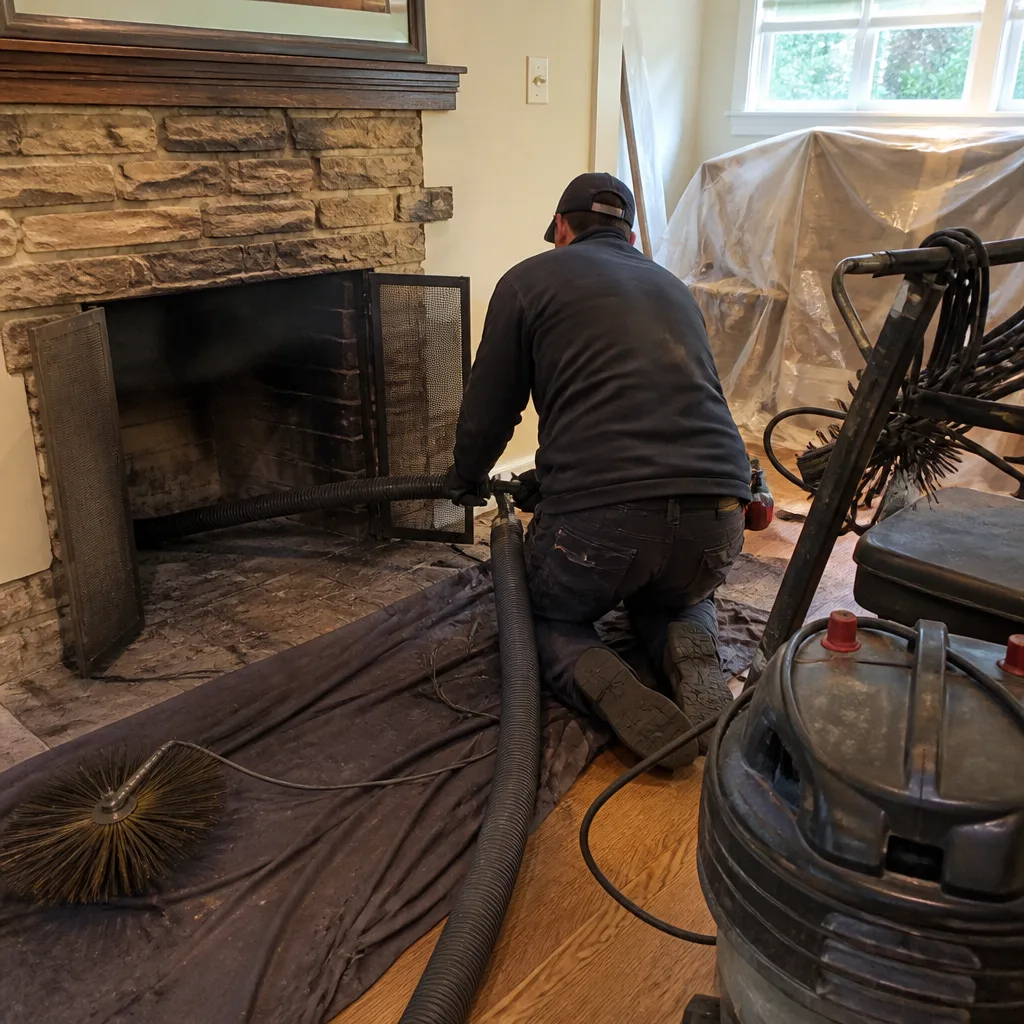 Before
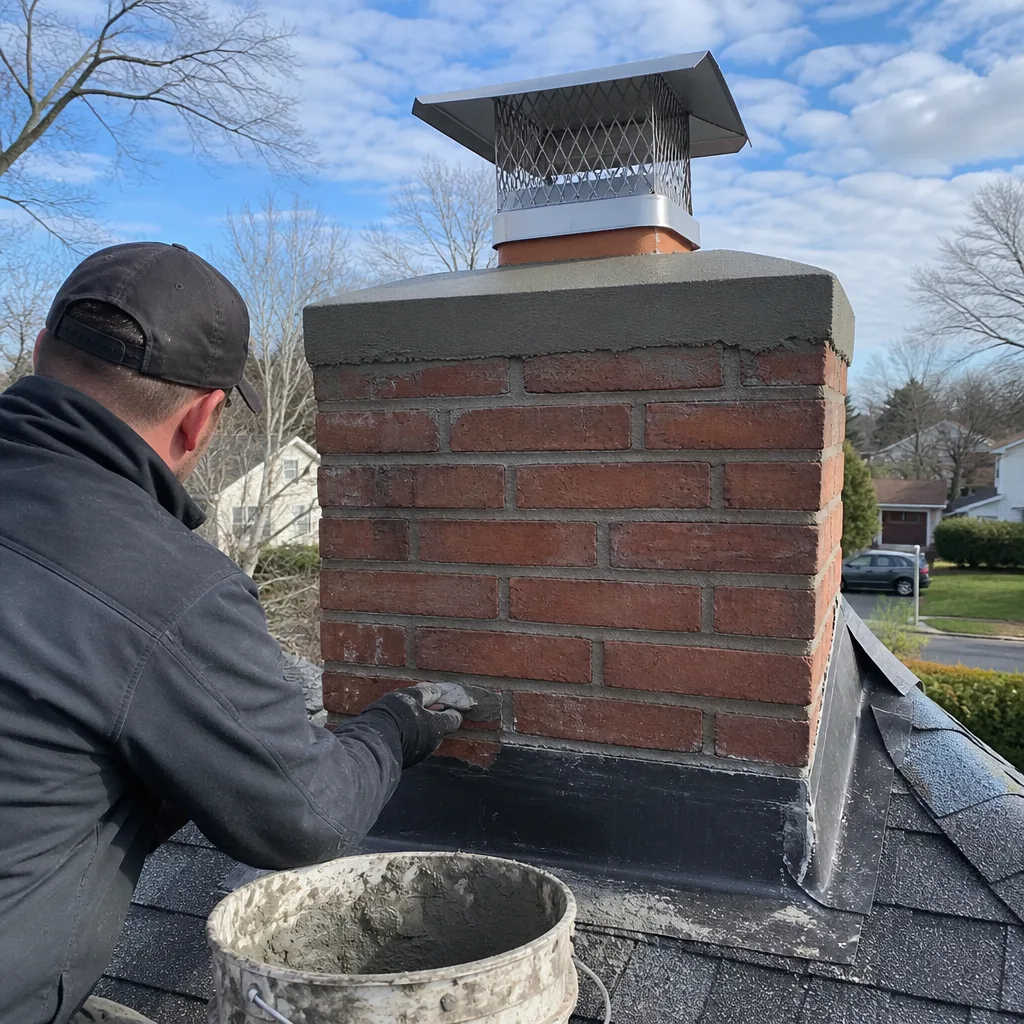 After
After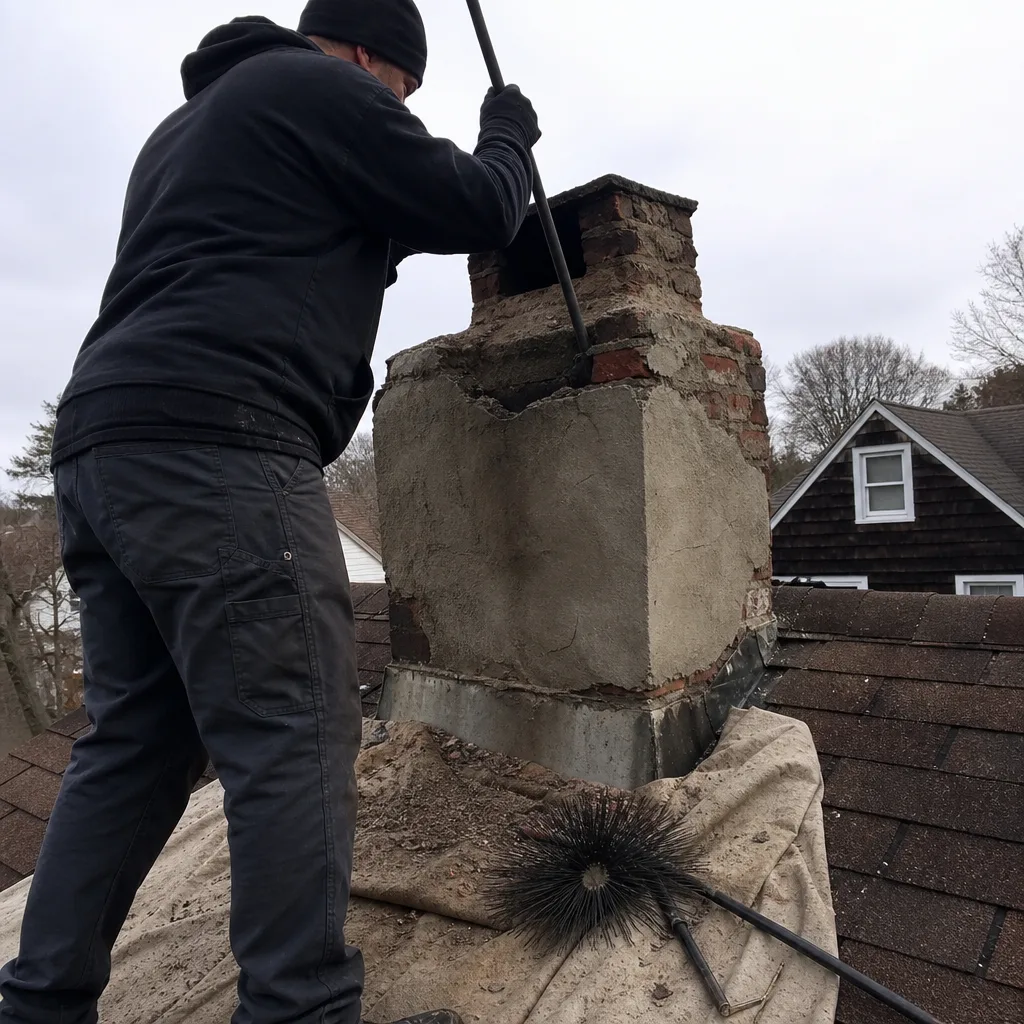 Before
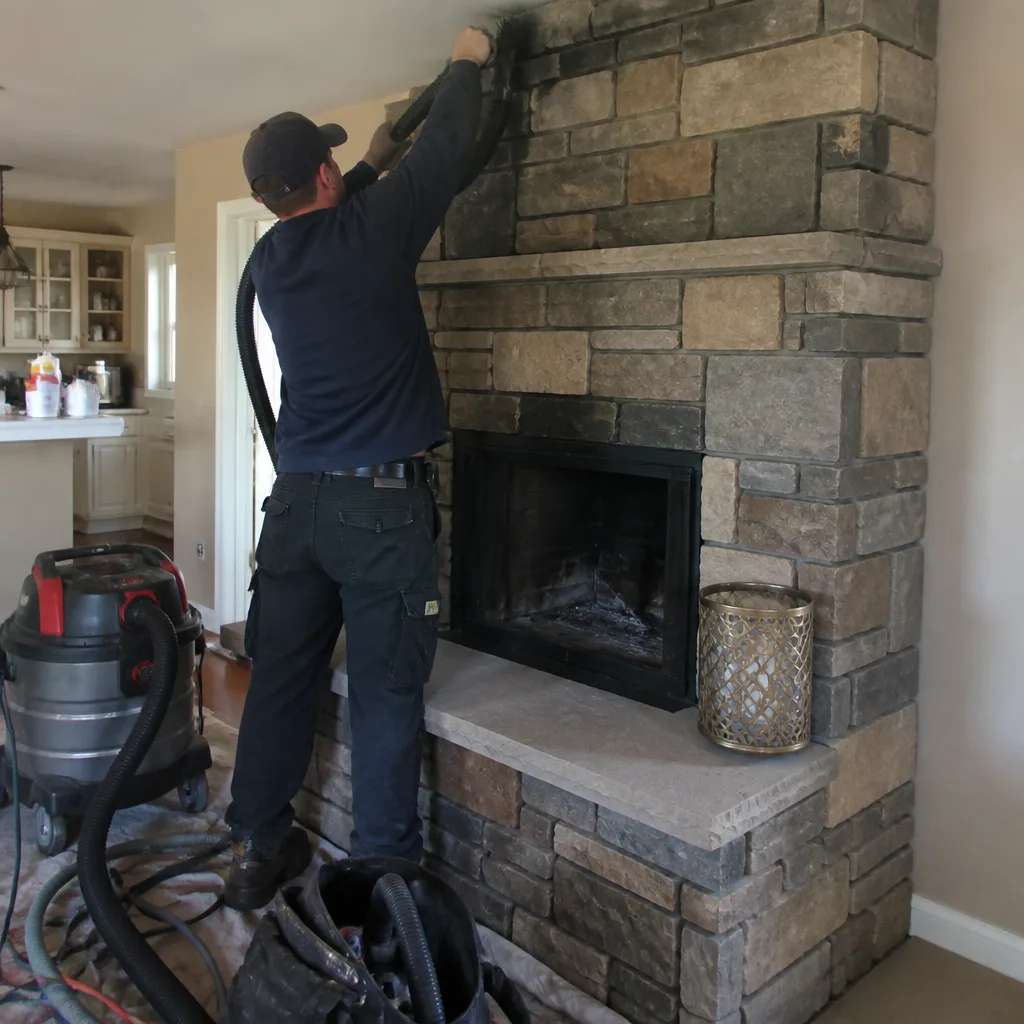 After
After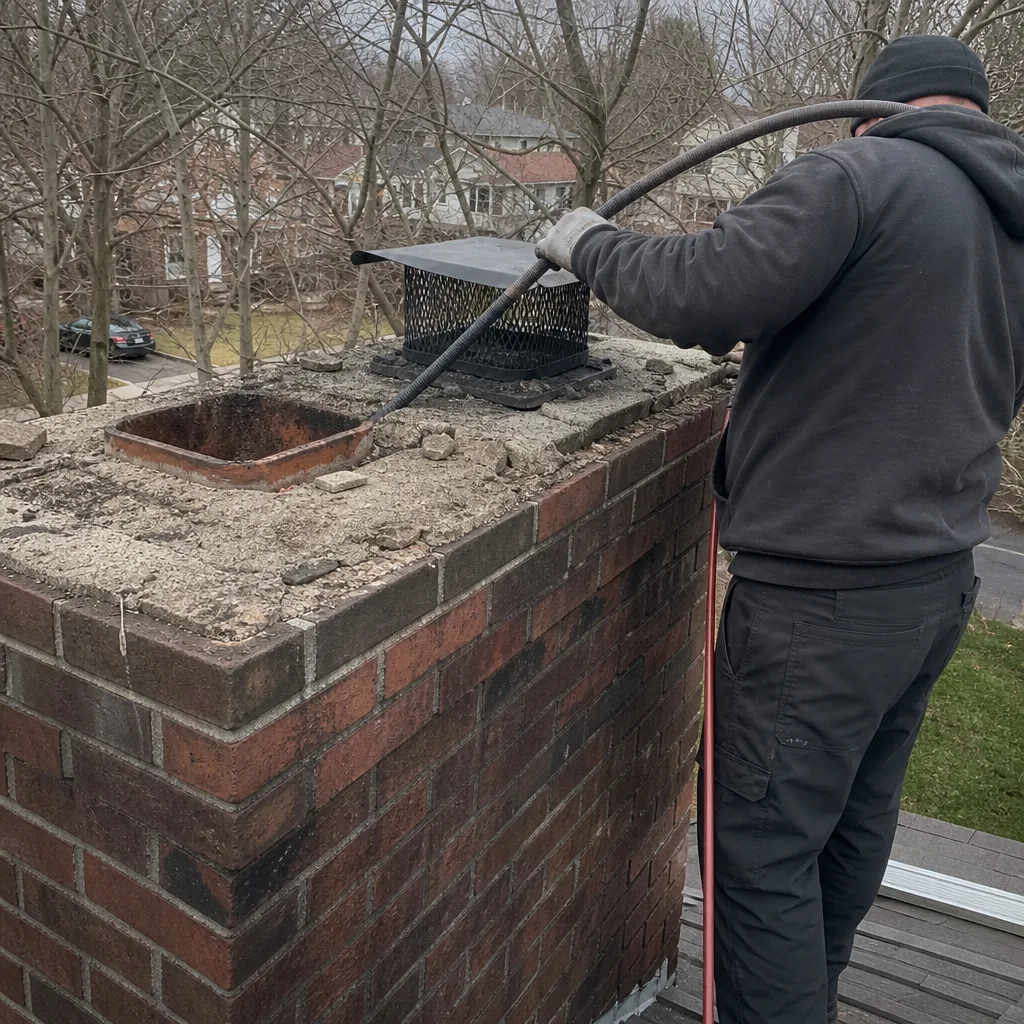 Before
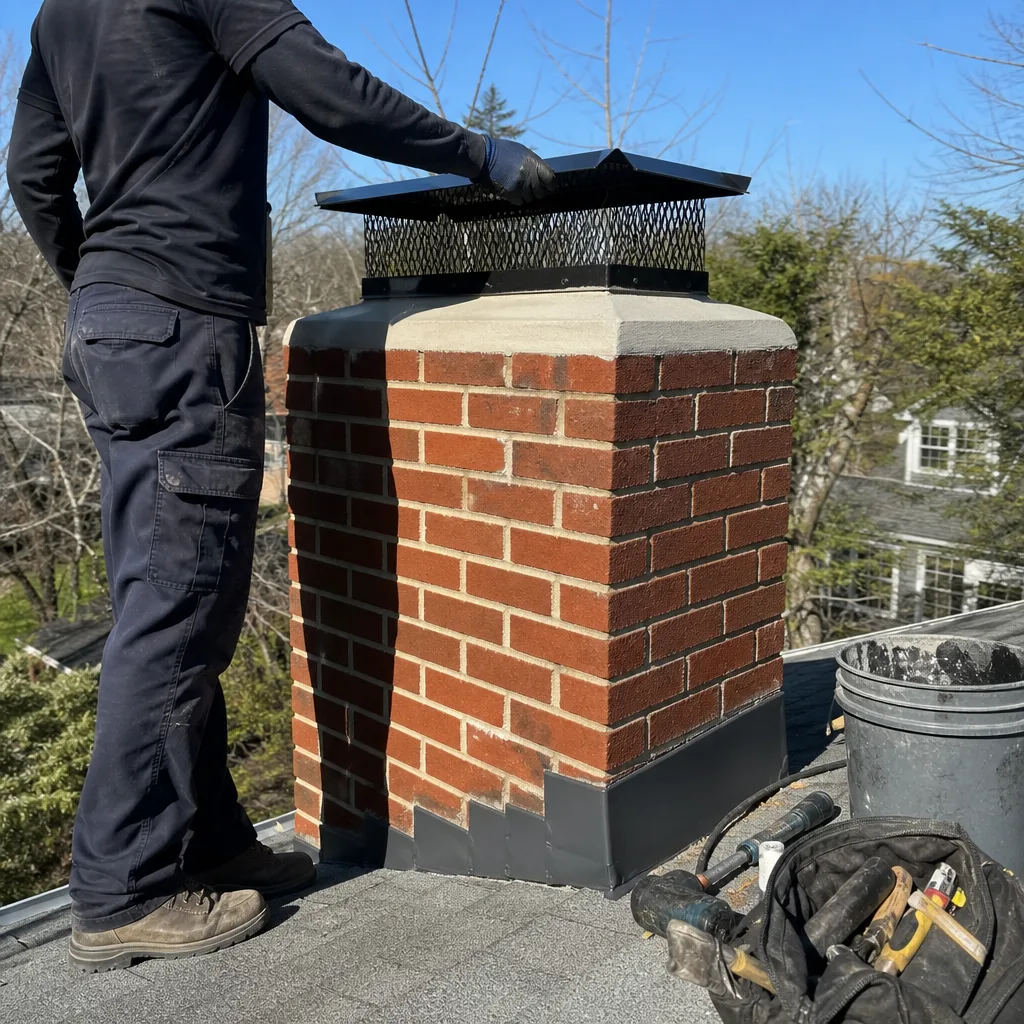 After
AfterThe Complete Guide to Chimney Cleaning in Huntington
Here’s something most homeowners in Huntington don’t realize: the same salt air that corrodes your patio furniture is quietly working on your chimney flue. We’ve pulled liners in Cold Spring Harbor and South Huntington that looked fine from the hearth but were pocked with chloride damage you could only see with a camera. Most chimney cleaning guides online are written for Ohio or Pennsylvania - inland climates with different moisture patterns, different freeze cycles, and no maritime exposure. For seasonal chimney cleaning care tailored to Huntington’s year-round coastal conditions, local guidance matters. This guide is different. We’ll explain what a proper sweep actually involves in Huntington, why the coastal environment matters for your inspection, and how to tell whether the person on your roof is cleaning debris or evaluating a system that keeps your house from burning down.
Quick Answer
Chimney cleaning in Huntington typically costs between $189 and $349 for a standard Level 1 sweep with inspection, depending on accessibility, fuel type, and whether the flue requires rotary cleaning for glazed creosote. Most wood-burning fireplaces in Huntington need sweeping annually, while gas systems need inspection every two years. A proper job includes a photo-documented condition report, not just a brushed flue and a receipt.
Table of Contents
- Why Huntington Chimneys Are Different: Salt Air, Humidity, and Older Housing Stock
- What Actually Happens During a Proper Chimney Sweep
- The Three NFPA 211 Cleaning Levels Explained
- How Coastal Climate Affects Creosote Buildup in Huntington
- How to Read Your Photo-Documented Inspection Report
- What Chimney Cleaning Costs in Huntington
- The Difference Between a Sweep Who Cleans and One Who Inspects
- Common Mistakes to Avoid
- When to Call a Professional
- Frequently Asked Questions
- The Bottom Line
Why Huntington Chimneys Are Different: Salt Air, Humidity, and Older Housing Stock
Huntington sits on the north shore of Long Island, close enough to Long Island Sound that salt-laden air reaches homes in neighborhoods like Huntington Bay, Lloyd Harbor, and parts of Cold Spring Harbor. That maritime exposure isn’t cosmetic. Salt chloride accelerates corrosion in metal flue liners, particularly in stainless steel systems that haven’t been properly graded for coastal environments. We’ve replaced DuraFlex liners in waterfront homes that failed in eight years rather than the fifteen you’d expect inland.
The humidity compounds the problem. Long Island’s summer moisture loads - often 70% relative humidity or higher - create condensation cycles inside chimneys that don’t dry properly. A flue that stays damp through October breeds accelerated creosote adhesion and, in some cases, efflorescence and spalling in the masonry itself. This isn’t theoretical. In our experience, Huntington chimneys show moisture-related degradation at roughly 1.3 times the rate we see in comparable inland markets.
Then there’s the housing stock. Large sections of Huntington, Huntington Station, and surrounding areas were built between 1920 and 1970. These homes often have:
- Unlined masonry chimneys or original clay tile liners with missing or deteriorated mortar joints
- Oversized flues designed for coal or oil conversions, now serving smaller, more efficient appliances
- Crowns built without proper overhang or drip edges, directing water into the structure
- Firebox brick that’s been patched multiple times with incompatible materials
A sweep who treats your 1955 Huntington ranch like a 2005 development home in Melville will miss conditions that matter. The inspection protocol should account for age, fuel history, and local weather patterns. That’s why we document everything with photos and a plain-English verdict - so you see what we see, not just what we’re telling you.
What Actually Happens During a Proper Chimney Sweep
There’s a gap between what homeowners imagine and what a sweep actually does. Most people picture a brush on rods and a vacuum. That’s part of it, but it’s roughly 30% of a proper job. Here’s the sequence we follow on every Chimney Cleaning & Sweep in Huntington:
- Exterior evaluation first. We look at the crown, cap, flashing, and visible masonry before we enter the house. In Huntington, we’re checking for salt staining, spalling brick, and crown cracks that let water bypass the cap entirely. If the crown’s failed, cleaning the flue is secondary.
- Firebox and damper inspection. We examine the firebox lining for cracks or gaps, check damper operation and seal, and look for signs of smoke spillage - soot stains above the opening, heat-damaged mantel materials, or creosote drips on the hearth.
- Flue cleaning with appropriate tools. Standard brushes for light soot. Rotary whips or chains for glazed creosote. The tool matches the deposit, not the other way around. We use professional-grade rods and brushes from Copperfield and Olympia Chimney - no hardware-store substitutes that snap in a tight flue.
- Debris removal and containment. HEPA vacuum, sealed work area, drop cloths. Your furniture shouldn’t know we were there.
- Level 2 camera inspection. This is where the inspection becomes documentation. We run a camera the full length of the flue, recording video and capturing still images of joints, offsets, and any damage. You see what we see. No “trust me” required.
- Written condition report with photos. Plain English. No jargon. If something can wait, we say so. If it can’t, we explain why and show you the evidence.
The whole process takes 60 to 90 minutes for a standard system. Longer if we find conditions that need closer examination. We’re not racing to the next appointment. Most jobs are completed in a single visit, and the pricing is agreed upfront - the number on the estimate is the number on the invoice.
The Three NFPA 211 Cleaning Levels Explained
The National Fire Protection Association defines three levels of chimney inspection and cleaning. Most homeowners don’t know which level they’re paying for, and some sweeps exploit that ambiguity. Here’s the breakdown, with specific examples from our work in Huntington:
Level 1 - Routine Maintenance
This is the annual sweep for a system that’s unchanged, burning the same fuel, and showing no performance problems. We inspect accessible portions of the chimney exterior, interior, and connecting appliances. No tools are needed to open doors or panels. In Huntington, this covers most gas fireplace inspections and wood-burning systems with consistent use patterns.
Level 2 - Change of Condition or Real Estate Transaction
Required when you’ve changed fuel types, relined the flue, had a chimney fire, or are buying or selling the home. This includes everything in Level 1 plus accessible attics, crawl spaces, and basements - and a camera inspection of the flue interior. In Huntington’s older housing stock, we recommend Level 2 for any home built before 1980 that hasn’t had documented camera inspection in the past five years. The salt-air and humidity factors we discussed earlier make this conservative approach warranted.
Level 3 - Suspected Hazard
When a hidden hazard is suspected and requires demolition or removal of components to access it. This is rare. We’ve initiated Level 3 protocols perhaps a dozen times in 42 years - typically when a hidden chimney fire has compromised structural masonry or when a liner collapse is suspected behind finished surfaces. It’s not a sales tactic. It’s a diagnostic necessity.
Here’s a simple reference:
| Level | When It’s Needed | Includes Camera? | Typical Huntington Cost Range |
|---|---|---|---|
| Level 1 | Annual maintenance, no changes | No | $189-$249 |
| Level 2 | Property sale, fuel change, suspected damage | Yes | $289-$349 |
| Level 3 | Hidden hazard suspected | Yes, plus access work | Quoted after evaluation |
If a sweep quotes you a single flat rate without asking about your fuel type, home age, or inspection history, you’re not getting a tailored assessment. You’re getting a transaction. Our step-by-step guide to hiring a chimney cleaning contractor in Huntington shows what questions to ask before you book.
How Coastal Climate Affects Creosote Buildup in Huntington
Creosote forms when wood smoke cools before complete combustion, condensing tar and organic compounds on flue walls. The rate depends on wood moisture, burn temperature, and - critically - flue surface temperature. And that’s where Huntington’s climate becomes relevant in ways generic guides miss.
A cold, damp flue draws slower and stays cooler. Cooler surfaces mean more condensation. More condensation means more creosote, and more of the glazed, tar-like third-stage creosote that’s hardest to remove. In Huntington, we see this pattern especially in:
- Homes where the chimney runs up an exterior wall with poor insulation
- Fireplaces used intermittently - weekend burns that never establish sustained flue temperature
- Systems with oversized flues (common in pre-1970s conversions) where smoke lingers and cools before exiting
- Properties near the water where prevailing winds create downdraft conditions that stall proper draw
The salt air adds a secondary mechanism. Chloride ions in maritime air deposit on metal liners and, in combination with condensation, create pitting corrosion that roughens the flue surface. A rough surface traps more creosote. It’s a feedback loop: more buildup, more acidic moisture retention, more corrosion, more buildup.
We’ve measured this in practice. In comparable wood-burning systems with similar use patterns, Huntington coastal properties average roughly 20% more creosote accumulation per cord burned than inland Suffolk County properties. The difference isn’t dramatic year-one, but over five years of “it looks fine” assumptions, it becomes significant.
This is why we don’t just sweep and leave. We measure, photograph, and report. If your burn habits and flue design are working against you, we’ll tell you plainly - and suggest adjustments that cost nothing, like preheating the flue with crumpled newspaper or switching to denser, drier hardwoods.
How to Read Your Photo-Documented Inspection Report
A proper inspection report should be understandable without a dictionary. If you receive a checklist with checkmarks and a bill, you’ve been shortchanged. Here’s what we provide after every Chimney Repair in Huntington or cleaning that reveals conditions, and what each section means for you:
Flue Interior Images
Look for clear, dated photos with measurement references. We annotate our images with location markers - “12 feet up, south-facing flue wall” - so you know exactly what you’re seeing. Common findings:
- Glazed creosote: Shiny, black, tar-like deposits. Requires rotary cleaning. Indicates slow, cool burns or green wood.
- Spalling clay tile: Flaking or missing surface on liner segments. Creates gaps where heat and combustion gases can reach surrounding masonry.
- Stainless steel pitting: Small, dark spots on metal liners. In Huntington, often chloride-related. Needs monitoring; may require earlier replacement than expected.
- Mortar joint gaps: Missing or eroded mortar between clay tiles. Allows leakage and reduces structural integrity.
Exterior Documentation
Crown condition, cap fit, flashing integration, and visible masonry. We note specific locations - “crown crack at northeast corner, approximately 8 inches” - not generalities like “crown shows wear.”
Verdict and Priority
We categorize every finding:
- Immediate: Safety hazard. Use discontinued until repaired. Examples: active liner breach, structural crack, blocked flue.
- Planned: Conditioned noted, can be scheduled. Examples: crown resealing, cap replacement, minor spalling repair.
- Monitor: Visible change, not yet critical. Examples: early pitting, minor efflorescence, slight mortar erosion.
If a report doesn’t include this triage, you’re not getting a verdict. You’re getting a description. The difference matters for your insurance, your safety, and your budget.
What Chimney Cleaning Costs in Huntington
Pricing transparency shouldn’t require negotiation. Here’s what chimney cleaning costs in the Huntington market, with the variables that move the number:
| Service | Typical Range | What Affects Price |
|---|---|---|
| Level 1 sweep (gas fireplace) | $189-$229 | Accessibility, number of appliances, insert removal |
| Level 1 sweep (wood-burning, standard) | $219-$279 | Creosote stage, flue length, roof access difficulty |
| Level 1 sweep with rotary cleaning (glazed creosote) | $269-$329 | Deposit thickness, flue diameter, time required |
| Level 2 inspection with camera | $289-$349 | Number of flues, attic/crawl access, documentation detail |
| Chimney cap installation (standard stainless) | $289-$449 | Flue count, cap style, existing damage |
| Crown sealing/repair | $349-$699 | Extent of cracking, resurfacing vs. rebuild |
These are Huntington-specific ranges. We’ve based them on our own pricing and what we know of the local market. If you’re quoted significantly below the Level 1 range, ask what’s excluded. If significantly above, ask what additional services are bundled.
Our standing offers: $50 off any repair over $250, free second opinion on any written estimate, $89 seasonal tune-up, and a permanent 5% senior and veteran discount. No-hassle upfront pricing means the estimate number is the invoice number. No surprises.
The Difference Between a Sweep Who Cleans and One Who Inspects
This distinction matters more than most homeowners realize, and it’s where the chimney industry separates into two categories.
A sweep who cleans arrives with brushes and a vacuum. They remove deposits, maybe shine a flashlight up the flue, and hand you a receipt. If you’re weighing DIY versus professional chimney cleaning in Huntington, understand that tools alone don’t make an inspection. The flue looks cleaner. Whether it’s sound, properly sized, or compatible with your appliance - that’s not their focus. They’re not necessarily dishonest. They’re just not trained or equipped to evaluate.
A sweep who inspects arrives with cameras, knowledge of NFPA 211, and the ability to explain how your specific system is performing. They can tell you whether your flue liner is rated for your stove output, whether your crown overhang meets current standards, and whether the salt-air corrosion we discussed is progressing faster than expected.
Here’s why this matters for your insurance. After a chimney fire, your insurer will ask for documentation of maintenance. “We had it swept annually” helps. “We have dated photo documentation from Level 2 inspections showing the flue was sound” helps more. In disputed claims, the homeowner with inspection records generally prevails over the homeowner with receipts for basic sweeps.
In Huntington’s older neighborhoods - the pre-1970s stock in Elwood, South Huntington, and parts of Huntington Station - the inspect-and-document approach isn’t premium service. It’s minimum competent care. These chimneys have seen multiple fuel conversions, decades of weather exposure, and often undocumented modifications. You need someone who reads a flue the way a mechanic reads an engine: for signs of stress, mismatch, and impending failure.
We document every inspection with photos and a plain-English verdict. Not because it’s marketable, but because it’s the only way to stand behind our work. The Hearthstone Chimney Co. home page explains our K.E.Y.S. values - Krafted right, Every time, Your home first, Standing behind it. The “Standing behind it” part requires evidence. Photos are evidence.
Common Mistakes to Avoid
- Hiring based on coupon price alone. A $99 sweep in Huntington is usually a loss-leader for upsell, or it’s a brush-and-go with no inspection. We’ve been called to second-opinion jobs where the “cheap” sweep missed a collapsed clay liner that was visible to anyone with a camera.
- Assuming gas fireplaces don’t need inspection. Gas burns cleaner, but the flue still deteriorates. We’ve found bird nests blocking gas flues, deteriorated termination caps leaking exhaust into attics, and rusted-out connectors in Huntington homes where owners assumed “gas means maintenance-free.”
- Ignoring the crown and focusing only on the flue. A cracked crown funnels water directly into the chimney structure. In Huntington’s freeze-thaw climate, that water expands, spalls brick, and destroys the chimney from the top down. The flue can be pristine while the structure fails.
- Using unseasoned or “green” wood. Wood with more than 20% moisture content creates excessive creosote, stresses your flue, and wastes fuel. In humid Huntington, even stored wood absorbs moisture. Buy kiln-dried or season your own under cover for at least 12 months.
- Skipping inspection after a chimney fire. Even a small chimney fire can crack clay tile or damage metal liners. The flue may look fine from below. Only a camera inspection reveals the actual condition. We provide free second opinions on any written estimate if you’ve had a fire and aren’t sure about the recommended repairs.
- Waiting for visible problems. By the time you see staining on the ceiling or smell smoke in the upstairs bedroom, the damage is established. Annual inspection catches conditions before they become symptoms.
- Hiring unlicensed, uninsured operators. Chimney work involves roof access, combustion systems, and structural evaluation. Verify liability insurance and worker’s compensation. Ask for documentation. A legitimate sweep provides it without hesitation.
When to Call a Professional
Call for inspection if you notice smoke backing up into the room, a persistent tar-like odor even when the fireplace isn’t in use, visible cracks in the firebox or exterior masonry, or white staining (efflorescence) on the chimney exterior. These aren’t cosmetic issues. They’re symptoms of conditions that can lead to chimney fires, carbon monoxide intrusion, or structural failure.
Call before burning season if you’ve never had a camera inspection and your home was built before 1980. Call if you’ve changed heating appliances, converted fuel types, or recently purchased the home without documented chimney evaluation. Call if your neighbor’s sweep found problems and your homes were built by the same developer in the same era - patterns repeat.
Hearthstone Chimney Co. offers free estimates in Huntington. A live person answers every call, 24 hours a day, 7 days a week. No voicemail, no callback queue. Reach us at (631) 776-4075. We’ll schedule a time that works, show up when we say, and give you a square deal with no surprises on the bill.
Frequently Asked Questions
A standard Level 1 chimney sweep in Huntington typically costs between $189 and $279, depending on fuel type, flue accessibility, and whether rotary cleaning is needed for glazed creosote. Level 2 inspections with camera documentation run $289 to $349. Call (631) 776-4075 for an exact quote - estimates are free.
Wood-burning fireplaces and stoves should be swept annually, per NFPA 211. Gas systems need inspection every two years. In Huntington’s coastal climate, we recommend annual inspection even for gas if the chimney is unlined or the home is pre-1970, due to salt-air corrosion and moisture cycling.
You shouldn’t accept a liner recommendation without photo evidence you can see yourself. A proper inspection shows you the damage - cracked clay tile, spalling mortar joints, or corroded metal - and explains why it matters. At Hearthstone, nothing is recommended without documentation, and we’ll plainly tell you when work can safely wait. We also offer free second opinions on any written estimate.
Skipped maintenance allows creosote accumulation, which increases chimney fire risk and can obstruct proper draft. In Huntington’s humid climate, moisture retention accelerates liner and masonry deterioration. Carbon monoxide becomes a concern if flue gases leak through compromised joints. The cost of prevention is a fraction of the cost of remediation after failure.
Light soot removal with proper brushes is possible for knowledgeable homeowners, but it doesn’t replace professional inspection. We do not recommend DIY approaches for glazed creosote, suspected liner damage, or masonry evaluation. The work involves roof access and combustion safety knowledge. For Huntington’s older housing stock with unknown modification history, professional evaluation is the prudent choice. Call (631) 776-4075 to discuss what’s involved.
A sweep removes deposits and obstructions. An inspection evaluates the system’s condition, safety, and code compliance. A proper service includes both, with photo documentation. In Huntington, given the age of much of the housing stock and coastal environmental factors, the inspection component is not optional - it’s the purpose of the visit.
The Bottom Line
Chimney cleaning in Huntington isn’t a commodity service. The coastal climate, the age of the housing stock, and the gap between basic sweeping and genuine inspection make the choice of sweep consequential. Look for photo-documented evaluation, NFPA 211 knowledge, pricing that’s agreed before work begins, and a company that will be around to stand behind its work. We’ve served local communities for over 42 years. We’re not going anywhere. For more guides & resources on protecting your home, explore our blog. Done right - and we stand behind it.
Written by Russell Haines, Owner at Hearthstone Chimney Co., serving Huntington since 2014.