
Last updated September 10, 2026
Level 1 sweep and inspection to the NFPA 211 annual standard - flue, crown, cap, and flashing checked and photographed
Chimney sweep logs do not sweep chimneys. They loosen some creosote - which then falls where a brush and vacuum still have to collect it.
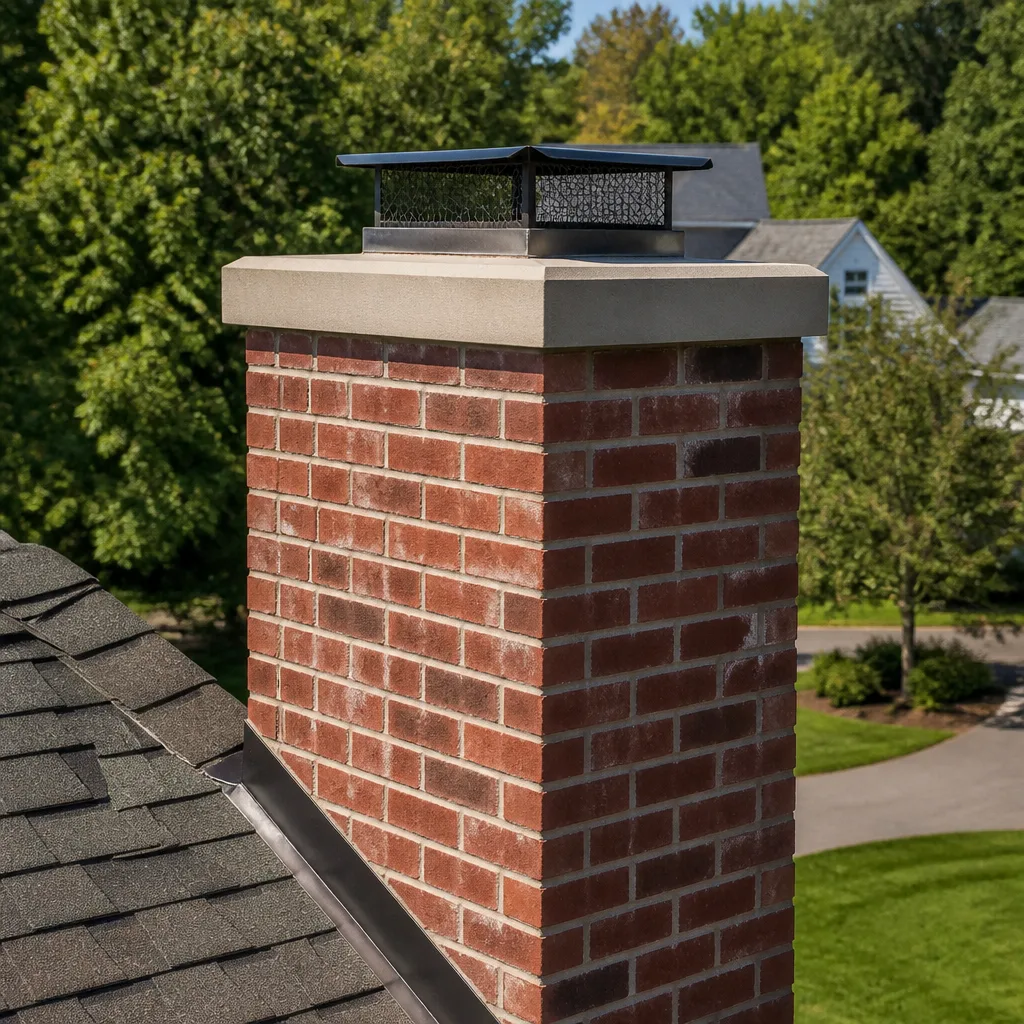
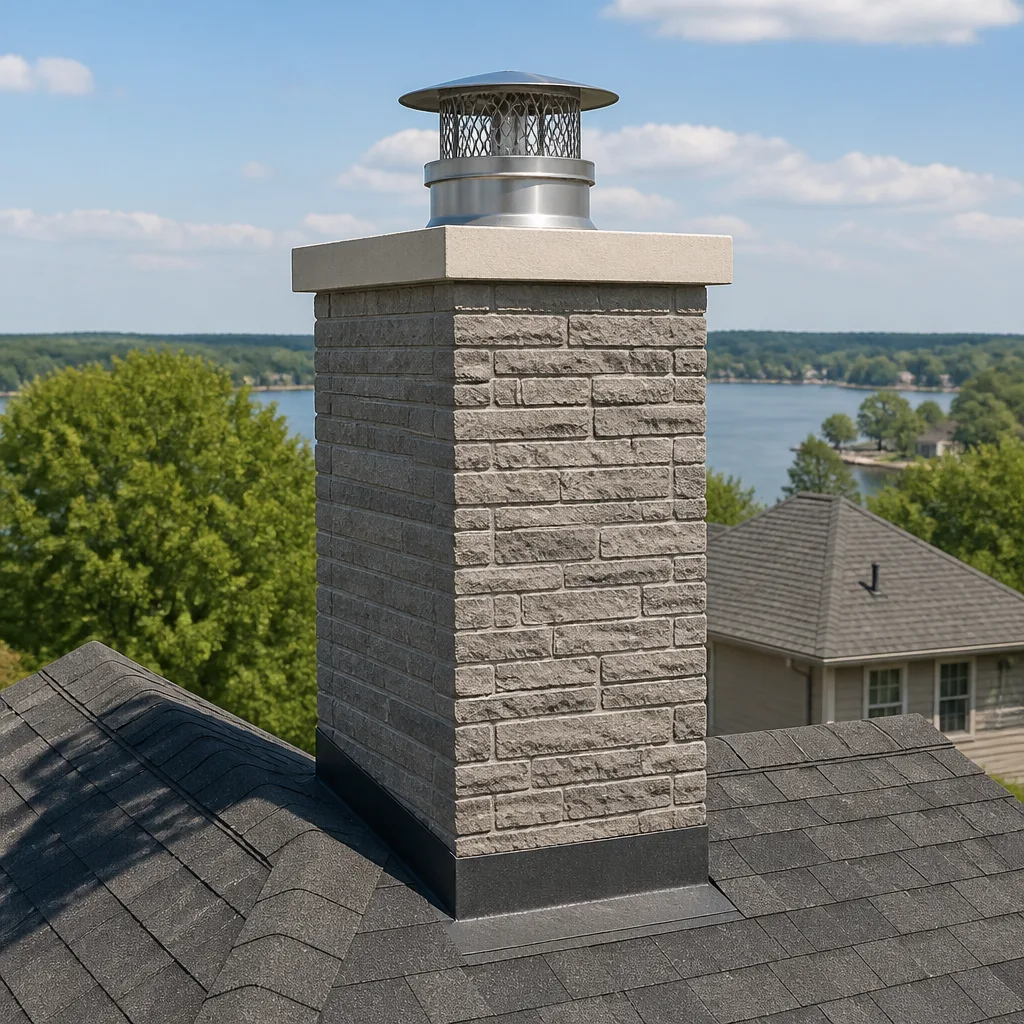
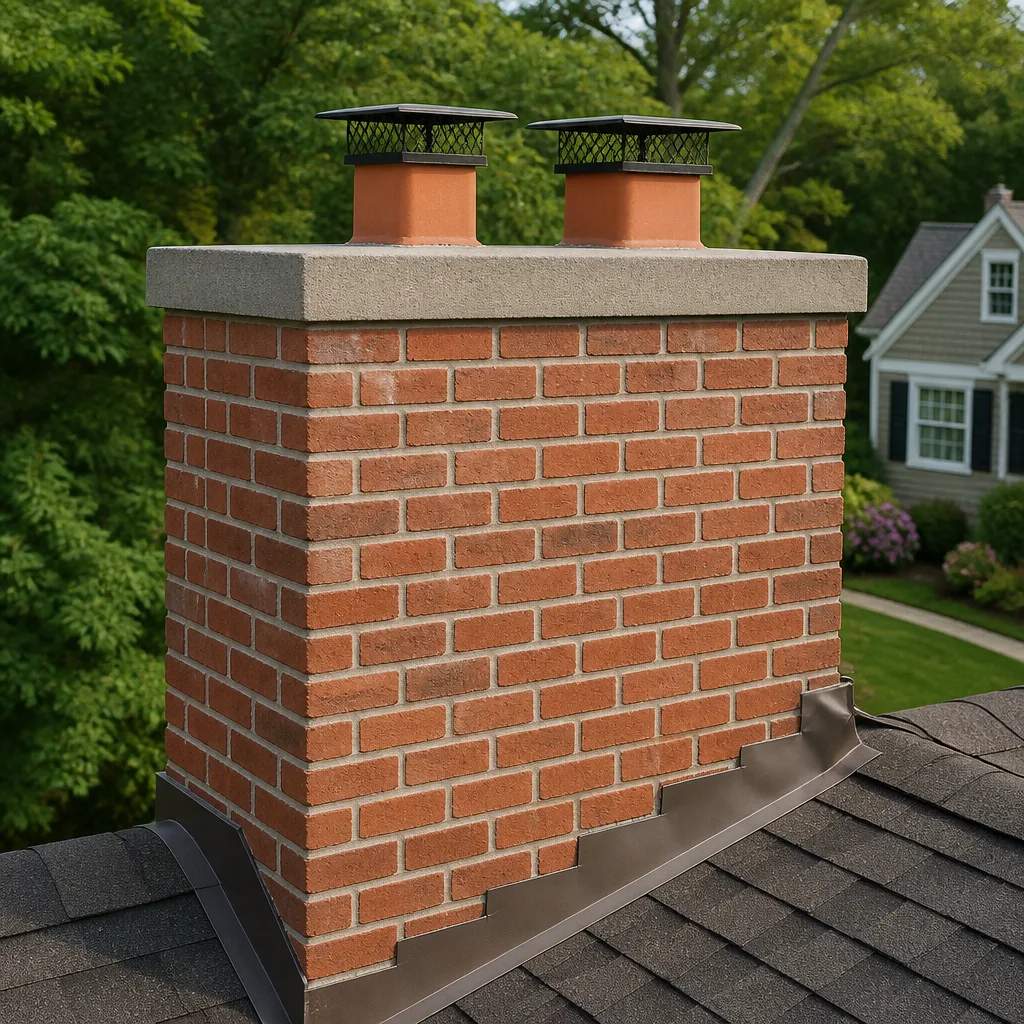
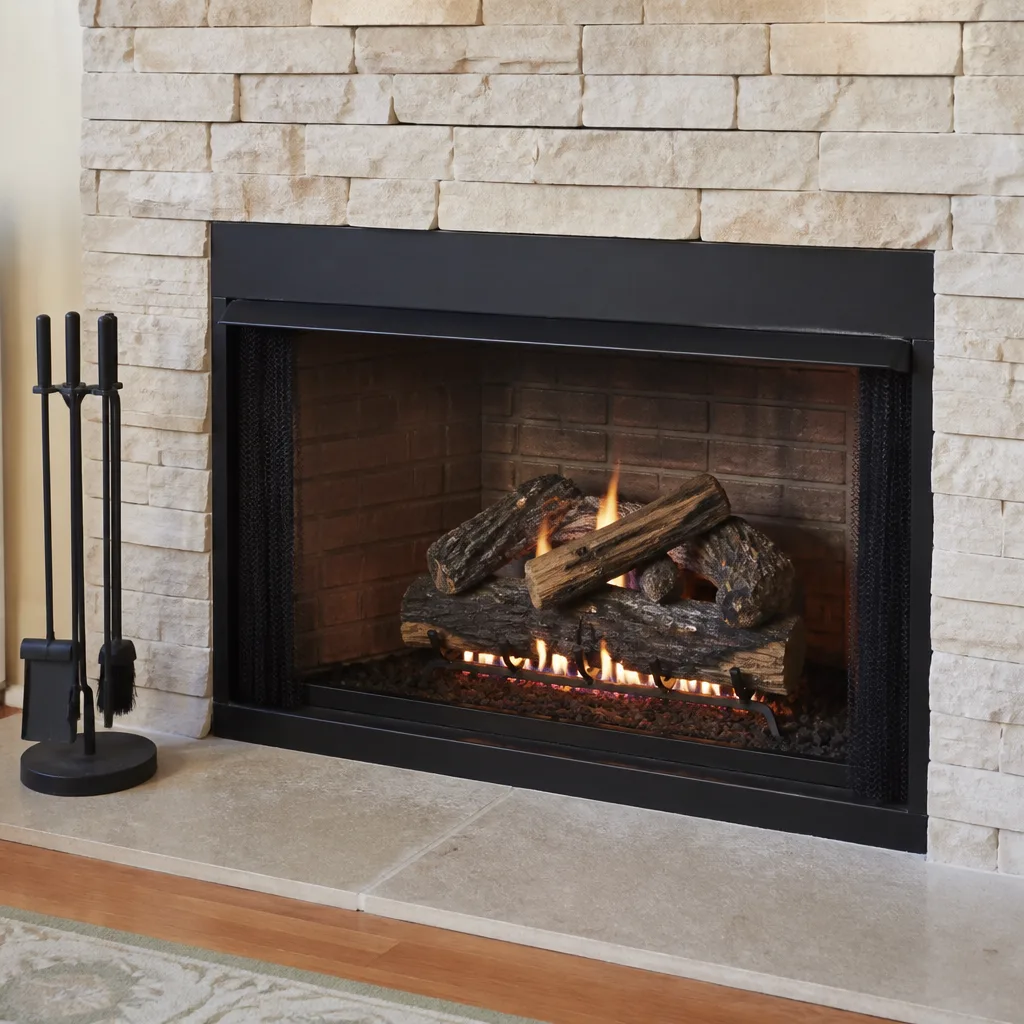
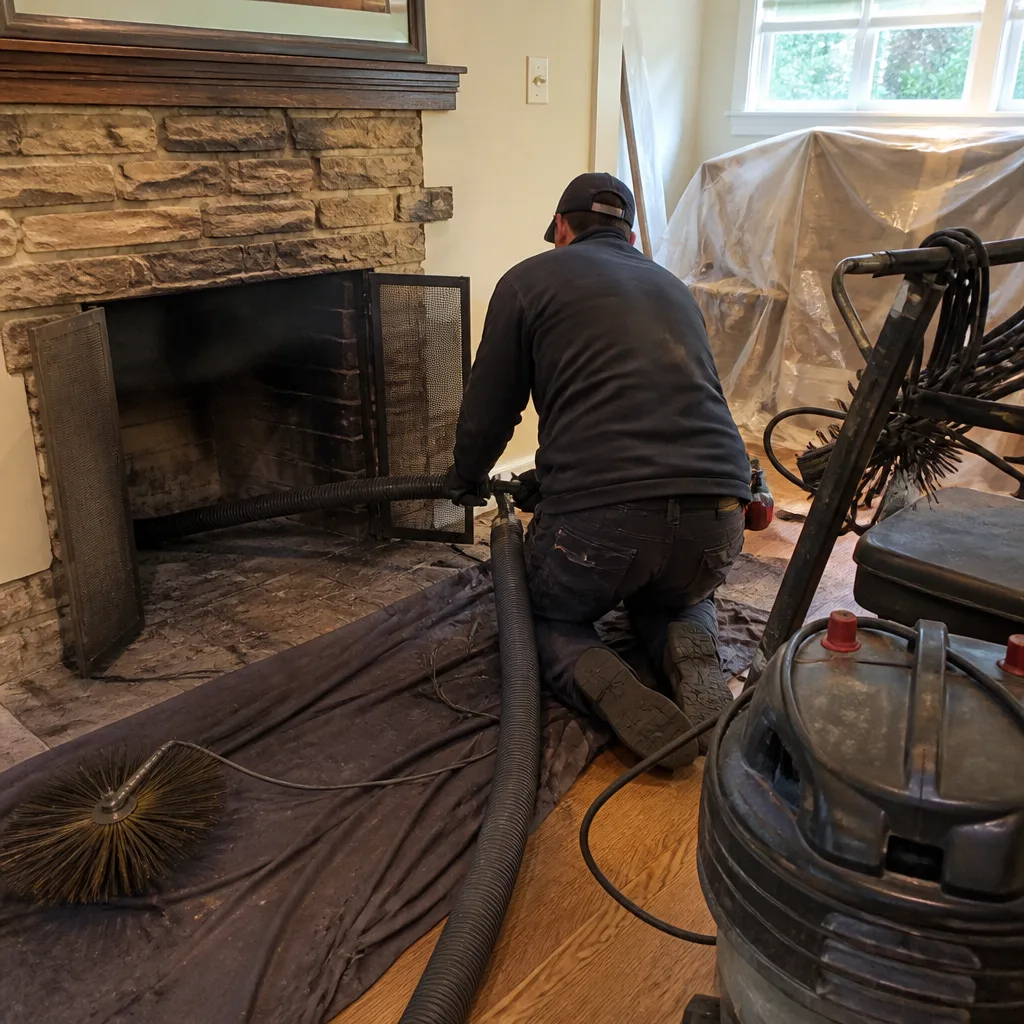 Before
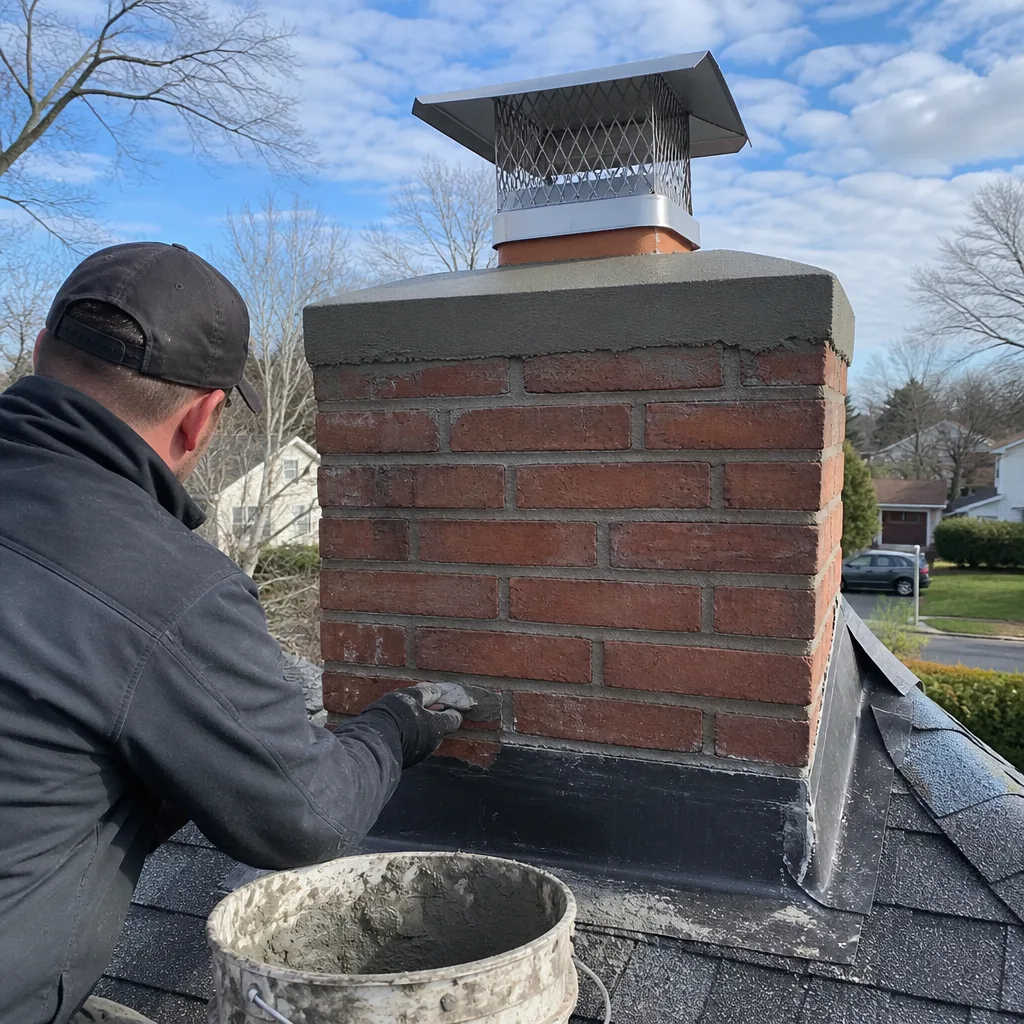 After
After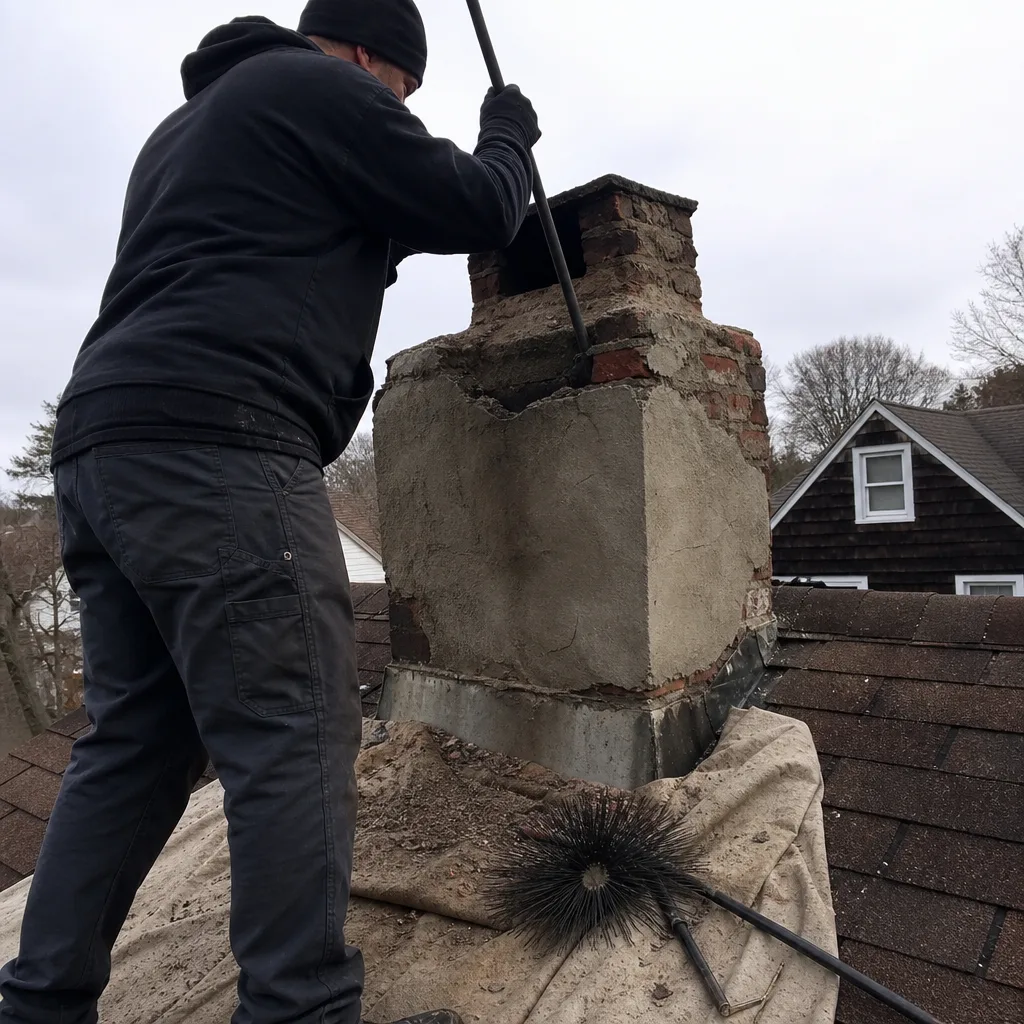 Before
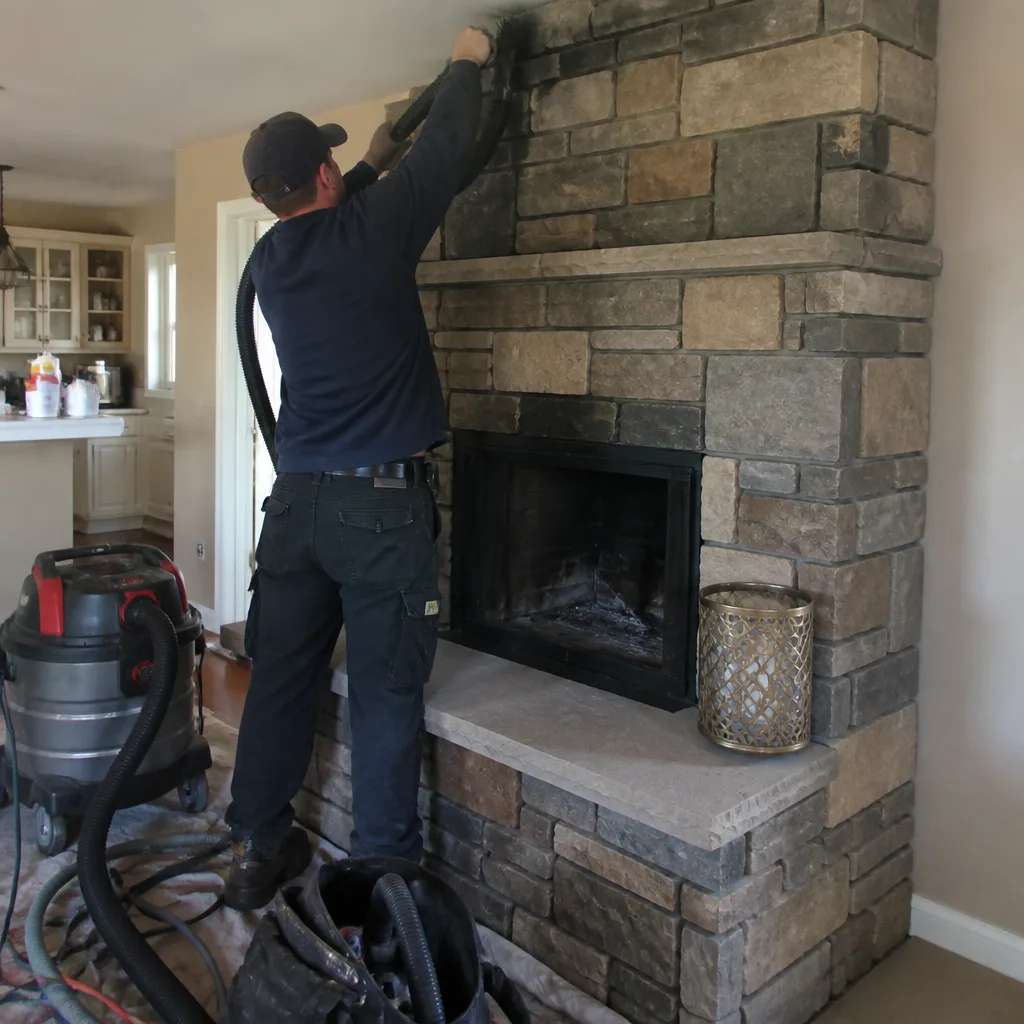 After
After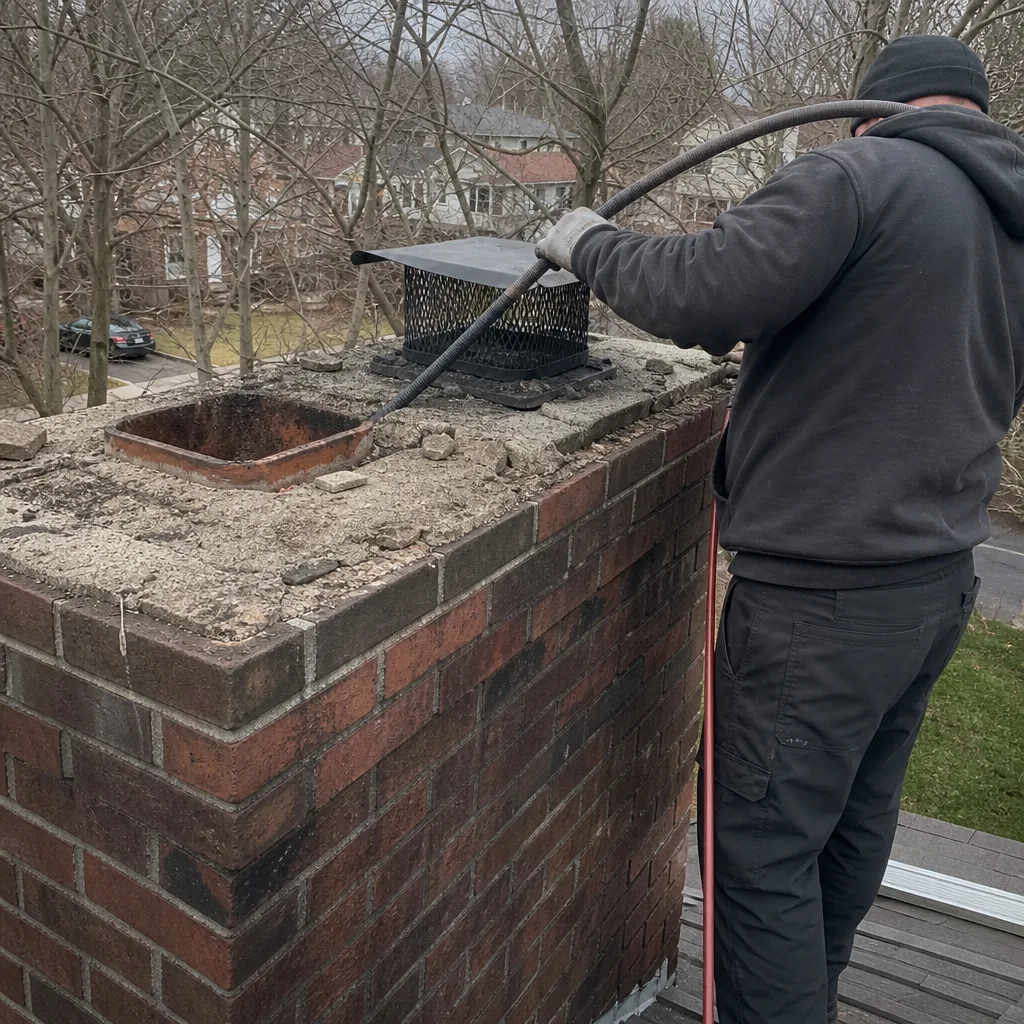 Before
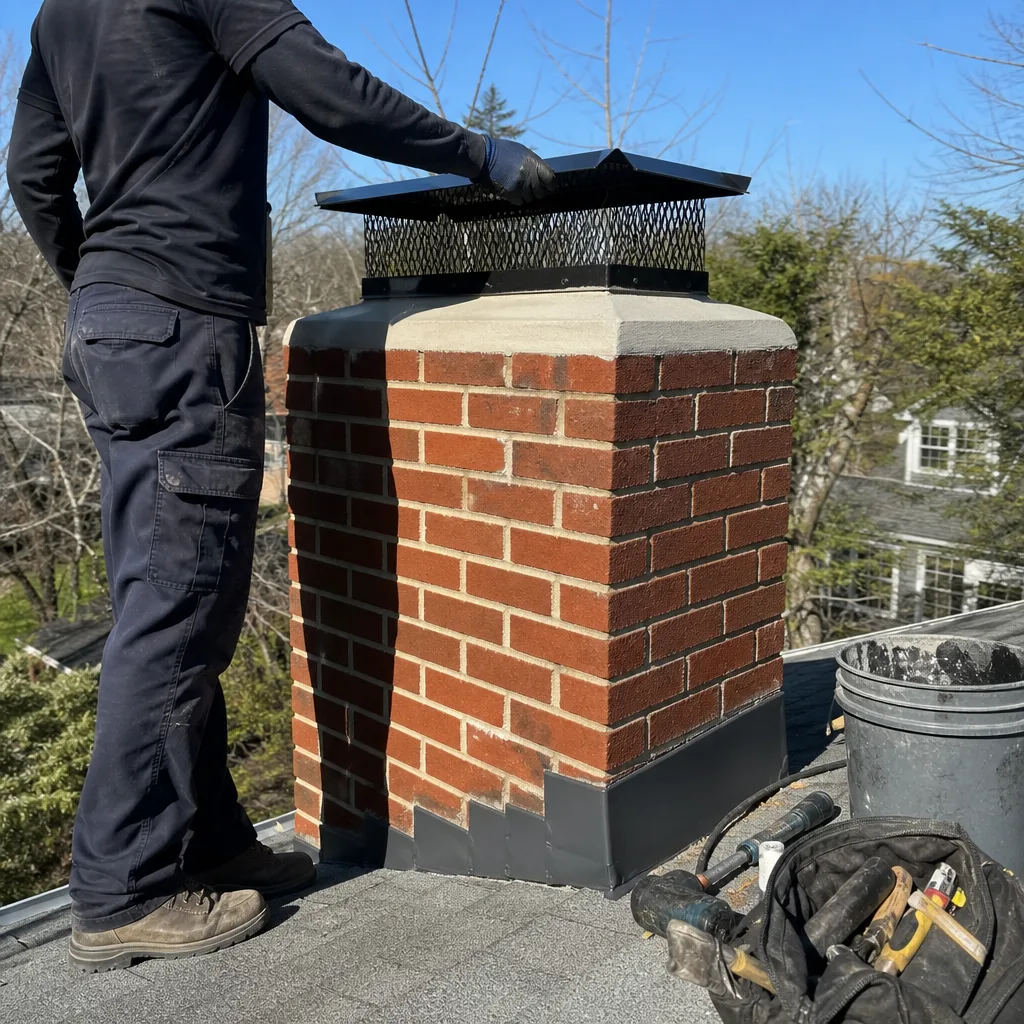 After
AfterDIY vs Professional Chimney Cleaning: The Huntington Homeowner’s Decision Guide
Here’s a truth most chimney companies won’t say out loud: you can absolutely clean your own flue. The brushes, rods, and vacuums are available at any hardware store or online, and plenty of Huntington homeowners do it every fall before the first fire. What you cannot do - what no homeowner can do, regardless of how handy they are - is inspect the liner, evaluate the smoke chamber, or spot the hairline crack that turns a cozy evening into a house fire. In our 42 years serving Huntington, we’ve seen DIY cleanings that looked immaculate from the fireplace opening but hid creosote buildup in the smoke chamber, deteriorating clay tiles in the flue, and gaps in the liner that would have failed a Level-2 inspection. This guide walks you through exactly what DIY chimney cleaning accomplishes, what it cannot, and how to decide which path makes sense for your home. For how to hire a chimney cleaning contractor in Huntington, see our step-by-step guide.
Quick Answer
DIY chimney cleaning removes loose soot and surface creosote from the flue but cannot inspect the liner, smoke chamber, or hidden structural damage. Professional cleaning includes a Level-2 camera inspection that documents internal conditions with photos you can see. For Huntington homeowners burning wood regularly, we recommend professional sweeping annually and DIY maintenance only between visits for ash removal and firebox tidying.
Table of Contents
- What DIY Chimney Cleaning Actually Accomplishes
- The Tools You Actually Need (And What They Cost)
- What Professionals Do Differently: Beyond the Brush
- How DIY Cleaning Can Mask Warning Signs
- Liability and Insurance: The Fine Print Nobody Reads
- The Middle Path: What You Can Safely Maintain Yourself
- Cost Comparison: Real Numbers for Huntington
- When to Call a Professional
What DIY Chimney Cleaning Actually Accomplishes
Let’s start with what works. A homeowner with patience, the right brushes, and a free Saturday can remove loose, powdery soot and light, flaky creosote from a straight, masonry flue in reasonable condition. The process is straightforward: seal the fireplace opening, run a poly or wire brush up and down the flue with extension rods, vacuum the debris, and call it done. For a Huntington homeowner who burns only a few fires per season in a relatively new fireplace, this may keep the flue passable between professional visits.
But here’s where honesty matters. DIY cleaning reaches only the main flue. It does not clean the smoke chamber - the area above the damper where most chimney fires start. It does not evaluate the damper mechanism, the firebox bricks, or the chimney crown. And it provides zero information about the flue liner, which is the single most critical safety component in the entire system.
In our experience across Huntington neighborhoods from Cold Spring Harbor to Huntington Station, the chimneys that worry us most are not the ones that haven’t been cleaned. They’re the ones that were “cleaned” by a well-meaning homeowner who saw black soot on the brush and assumed the system was safe. Soot on a brush tells you the brush made contact. It tells you nothing about whether the liner is cracked, whether the mortar joints are failing, or whether a bird’s nest is lodged in the flue just out of reach.
DIY cleaning also struggles with certain flue types. Stainless steel liners, common in Huntington homes with insert installations, require specific brush types - poly for light cleaning, wire for heavy creosote - and the wrong choice damages the liner. Flexible liners, like the DuraFlex systems we install, need careful handling that most homeowners haven’t been trained on. Clay tile flues in older Huntington homes, particularly those built before 1970 in the Elwood and Southdown areas, chip easily under aggressive brushing and hide damage that only a camera reveals.
The honest verdict: DIY cleaning is maintenance, not inspection. It maintains what you can see and reach. It does not diagnose what you cannot.
The Tools You Actually Need (And What They Cost)
A proper DIY chimney cleaning requires more than a brush from the hardware store and a shop vacuum. Here’s what the job actually demands, with realistic pricing based on what we’ve seen Huntington homeowners purchase:
| Tool | Purpose | Approximate Cost |
|---|---|---|
| Flue brush (poly or wire, sized to your flue) | Mechanical removal of soot and creosote | $25-$55 |
| Extension rods (fiberglass or poly, 6-12 feet) | Reach full flue length | $30-$75 |
| Chimney brush rod adapter | Connect brush to rods securely | $10-$20 |
| HEPA-rated ash vacuum or heavy-duty shop vac with fine dust filter | Contain fine particulate without redistributing | $150-$350 |
| Drop cloths and plastic sheeting | Protect flooring and furnishings | $20-$40 |
| Safety gear: respirator (N95 minimum), goggles, gloves, coveralls | Protect against carcinogenic creosote particles | $40-$80 |
| Flashlight or headlamp with strong beam | Visual inspection of accessible areas | $15-$40 |
| Mirror on extendable handle | Inspect smoke chamber from below | $15-$30 |
Total realistic investment: $305-$690 for tools you’ll use once annually. This assumes you already own a sturdy ladder tall enough to access your roof for crown and cap inspection - something many Huntington homeowners in split-level or two-story homes do not have.
Here’s what that tool list does not include, because no homeowner should own it: a video scanning camera and monitor for internal flue inspection ($2,500-$5,000); a combustion analyzer to test draft and CO levels ($800-$1,500); professional-grade creosote removal chemicals for glazed deposits ($200+ per treatment cycle); or the training to interpret what any of these tools reveal.
We’ve had Huntington customers tell us they “saved money” with a $50 brush and two hours of labor. Then we show them the camera footage of the cracked liner they never knew existed, and the math changes. The tools for cleaning are affordable. The tools for knowing whether cleaning was enough are not.
What Professionals Do Differently: Beyond the Brush
Professional chimney sweeping, at least as we practice it at Hearthstone Chimney Co., follows a sequence that begins where DIY ends. The cleaning is actually the middle step, not the whole job.
Step 1: Exterior Assessment
We start at the roof. In Huntington, where coastal winds off Long Island Sound drive rain sideways and freeze-thaw cycles stress masonry from November through March, the chimney crown and cap take more abuse than most homeowners realize. We document crown condition, cap fit, flashing integrity, and any spalling or missing bricks. This exterior work requires proper ladder safety, roof walking skills, and the judgment to know when conditions are too dangerous - something we train for, not something a homeowner should gamble with.
Step 2: Interior Cleaning With Containment
Our technicians use commercial HEPA vacuums, not shop vacs, with negative air pressure to prevent soot migration into your living space. The brushes are selected based on flue type - poly for stainless liners like DuraFlex, wire for heavy creosote in clay tile - and rotated at controlled speeds to avoid liner damage. The smoke chamber, that angled area above your damper, is hand-cleaned with specialized tools that fit the geometry. Most homeowners don’t know the smoke chamber exists; it’s invisible from the fireplace opening without a mirror or camera.
Step 3: Level-2 Camera Inspection
This is the step that separates professional work from DIY. We run a high-resolution camera up the full length of the flue, recording video and capturing still images of every joint, every tile, every transition. The homeowner sees exactly what we see, displayed on a monitor in real time, with our technician explaining each finding in plain English. No guessing. No “trust us.” Photos you can see, a plain-English verdict.
In Huntington’s older housing stock - the 1920s colonials near Heckscher Park, the mid-century ranches in Dix Hills, the waterfront homes in Centerport - we’ve found clay tile flues with gaps wide enough to see daylight, stainless liners corroded by salt air, and unlined brick chimneys that predate modern codes. None of these conditions are visible from the fireplace opening. None are detectable with a brush and a flashlight.
Step 4: Documentation and Verdict
Every Hearthstone inspection ends with written documentation: what we found, what it means, what needs attention now, what can wait, and what to monitor. If repairs are needed, we explain why, show you the photo evidence, and provide upfront pricing before any work proceeds. No surprises on the bill. No pressure to decide immediately.
The chimney repair services we provide - from crown rebuilding with professional-grade materials to liner replacement with DuraFlex or HeatShield systems - are recommended only when camera evidence supports the need. We’ve told homeowners their chimney is fine for another season. We’d rather earn trust than sell work.
How DIY Cleaning Can Mask Warning Signs
This is the section most chimney companies avoid because it sounds like fear-mongering. We’ll be direct instead. DIY chimney cleaning doesn’t create danger, but it can create false confidence - and false confidence is more dangerous than acknowledged ignorance.
Here’s how it happens. A Huntington homeowner runs a brush up the flue, sees black residue on the bristles, and concludes the chimney is “clean.” They light a fire that evening, unaware that:
- The brush never contacted the smoke chamber, where glazed creosote - the hard, tar-like deposit that ignites most chimney fires - has accumulated over years of use.
- A section of clay tile liner, visible only from above, has shifted or cracked, allowing heat and combustion gases to reach combustible framing.
- The damper is corroded and no longer sealing properly, drawing warm air out of the house even when “closed” and reducing draft when open.
- Water intrusion from a deteriorated crown has saturated the masonry, accelerating freeze-thaw damage that will require rebuilding within two to three seasons.
We’ve seen this pattern repeatedly in Huntington neighborhoods. A homeowner in Greenlawn cleaned their own flue for six consecutive years, never knowing the liner had a gap at the second course of tiles. When they finally called us after noticing a smoky smell in an upstairs bedroom, the camera revealed pyrolysis - heat-damaged, charred framing members in the wall chase. The chimney had been “clean” every year. It had never been inspected.
The brush removes what it touches. It does not reveal what it missed. And in a chimney system, what you miss is what burns.
Another subtle risk: aggressive DIY brushing can damage a liner that was already marginal. Clay tiles chip. Mortar joints loosen. Stainless steel liners scratch, creating corrosion points. A homeowner trying to do the right thing can accelerate the failure they’re trying to prevent. We’ve replaced liners in Huntington homes where the damage pattern matched DIY cleaning attempts - straight, even scoring on stainless, or fresh chips at tile edges that professional tools don’t produce.
Liability and Insurance: The Fine Print Nobody Reads
Homeowner’s insurance policies contain language that most people never examine until after a loss. When it comes to chimney fires and carbon monoxide events, that language matters.
Standard homeowner’s policies in New York State typically cover fire damage regardless of cause, but with important caveats. If the insurer determines that the fire resulted from “negligent maintenance” - a term that adjusters interpret broadly - they may deny the claim or reduce the payout. A DIY cleaning record, with no professional inspection documentation, gives the insurer grounds to argue that the homeowner failed to maintain the system properly. We’ve seen this dispute arise in Suffolk County claims where the homeowner had cleaned the flue themselves but had no camera inspection, no written report, and no certified sweep’s verification of safe condition.
Carbon monoxide events carry even sharper liability. CO is odorless, colorless, and lethal at concentrations that a damaged flue can produce. If a blocked or cracked flue vents CO into living spaces, and the homeowner has no record of professional inspection, liability can extend beyond insurance denial to personal injury claims from family members or guests. This is not theoretical - CO poisoning cases in New York have resulted in settlements where maintenance records were central to the determination of negligence.
Professional chimney sweeps carry liability insurance and errors-and-omissions coverage specifically for this work. Our documentation - dated, photo-supported, written reports - provides a record that shifts liability appropriately. If we’ve inspected your chimney and cleared it for use, and a subsequent event occurs due to a condition we should have caught, our insurance responds. If you’ve cleaned it yourself and missed a condition no reasonable homeowner would detect, your homeowner’s policy is your only protection - and it may not respond fully.
For Huntington homeowners in the 55-to-75 demographic we serve most often, this matters differently than for younger buyers. You’ve built equity. You carry umbrella policies. You have assets worth protecting. The cost of professional inspection is minor compared to the exposure of an uninsured or underinsured loss.
The Middle Path: What You Can Safely Maintain Yourself
Not everything requires a professional. There is legitimate seasonal chimney cleaning care that Huntington homeowners can perform between annual inspections, and we encourage it. The key is knowing the boundary between safe maintenance and false confidence.
What You Can Do
- Remove ashes regularly. Wait 24 hours after the last fire, then shovel cool ashes into a metal container with a tight lid. Store the container outside, away from combustibles, for at least three days before disposal. In Huntington’s dry winter air, hidden embers can reignite longer than you’d expect.
- Clean the firebox. A stiff brush and warm water with mild dish soap removes soot from firebrick. Avoid harsh chemicals that can damage mortar or leave residues that off-gas when heated.
- Inspect visible components. Open the damper fully and check for obstructions - bird nests, leaves, debris - that you can see from below. Use a flashlight. If you see blockage beyond arm’s reach, stop and call.
- Check the chimney cap from ground level. Binoculars help. Look for visible damage, missing mesh, or displacement after high winds. Huntington’s coastal storms can loosen caps that seemed secure.
- Monitor for changes. New odors, draft changes, smoke spillage into the room, or moisture stains on the chimney breast are warning signs. Note them and mention them when you schedule professional service.
- Burn only seasoned hardwood. This isn’t maintenance exactly, but it’s the single most effective step homeowners can take. Dry oak, maple, or ash - split and stacked for 12+ months - produces minimal creosote. Green or soft wood, Christmas trees, or construction scraps create heavy, glazed deposits that accelerate system deterioration.
What You Should Not Do
- Do not attempt to clean the flue if you have a steep roof, physical limitations, or any uncertainty about ladder safety. Falls from roof height are a leading cause of homeowner injury.
- Do not use chemical logs marketed as “creosote removers” as a substitute for mechanical cleaning. They reduce buildup slightly but do not remove existing deposits and can mask the need for proper sweeping.
- Do not assume that a “clean” flue means a safe system. The distinction is the entire point of this guide.
The middle path is prudent: maintain what you can see and reach, inspect what you cannot, and document everything. Our fireplace services in Huntington include annual tune-ups that complement homeowner maintenance without replacing it.
Cost Comparison: Real Numbers for Huntington
Let’s talk plainly about money. Huntington is not the cheapest market for chimney services - our cost of living, insurance requirements, and skilled labor pool place us mid-to-high for Suffolk County. But “cheapest” and “safe” are different metrics.
DIY Costs (First Year)
| Item | Cost |
|---|---|
| Tools and supplies (from table above) | $305-$690 |
| Your time (4-6 hours including learning, setup, cleanup) | - |
| Risk of incomplete inspection, undetected damage, or personal injury | Unquantifiable |
Professional Costs (Hearthstone Chimney Co., Huntington)
| Service | Cost |
|---|---|
| Seasonal Tune-Up (cleaning + basic inspection) | $89 |
| Level-2 camera inspection with photo report | Included in tune-up or priced separately based on system |
| Repair work if needed | Upfront pricing agreed before work begins |
The math is straightforward. Even at the low end of DIY tool costs, one professional tune-up costs less than the equipment alone. Over multiple years, the tool investment amortizes somewhat - but only if the tools last, only if you use them correctly every year, and only if nothing goes wrong that requires professional intervention anyway.
Our standing offers for Huntington homeowners include $50 off any repair over $250, a free second opinion on any written estimate from another company, and a permanent 5% senior and veteran discount. The Seasonal Tune-Up at $89 includes more than most homeowners can accomplish with $500 in tools: commercial-grade HEPA containment, proper brush selection for your flue type, smoke chamber hand-cleaning, and a trained technician’s eyes on every accessible component.
For chimney cleaning in Huntington, professional service is not a luxury purchase. It’s a cost-competitive choice that includes documentation, liability protection, and the information you need to make informed decisions about your home.
When to Call a Professional
Certain conditions require professional evaluation regardless of your DIY comfort level. Call immediately if you notice:
- Smoke entering the room during normal fireplace use
- Strong, unusual odors from the fireplace or chimney, especially a tar-like smell
- Visible cracks in the firebox bricks or mortar
- Water stains or efflorescence (white powder) on the chimney breast or adjacent walls
- A damper that sticks, won’t open fully, or won’t close completely
- Any fall or impact to the chimney structure - earthquake, tree strike, vehicle collision
- You’re buying or selling a home in Huntington and need documentation for the transaction
- It’s been more than 12 months since your last professional inspection, even if you’ve cleaned the flue yourself
Hearthstone Chimney Co. offers free estimates in Huntington. A live person answers our phones 24 hours a day, 7 days a week - not a voicemail, not a callback queue. Our background-checked, uniformed technicians complete most jobs in a single visit, and we provide no-hassle upfront pricing so the number on the estimate is the number on the invoice. Call (631) 776-4075 to schedule or to discuss what you’re seeing.
Common Mistakes to Avoid
- Using the wrong brush for your flue type. Wire brushes on stainless steel liners, like the DuraFlex systems we install, scratch and corrode the metal. Poly brushes on heavy glazed creosote won’t remove it. Match the tool to the job or hire someone who knows how.
- Cleaning from the top down without proper roof safety. Huntington’s coastal winds and winter ice make roof work hazardous for untrained homeowners. Falls from chimney height cause permanent injury. If you can’t work safely from below, don’t work at all.
- Assuming “no soot” means “no problem.” A flue that produces little soot may have excellent draft - or it may have a blockage preventing proper airflow. Low soot volume without professional verification is not reassurance.
- Ignoring the smoke chamber. This angled area above the damper is where most chimney fires ignite. It’s invisible without specialized tools and unreachable with standard brushes. In our experience, it’s the most neglected component in DIY cleanings across Huntington.
- Using household vacuums for ash removal. Standard vacuums lack fine-particle filtration and can redistribute carcinogenic creosote dust throughout your home. HEPA-rated equipment is essential, and even then, proper technique matters.
- Skipping annual professional inspection because “I clean it myself.” This is the most dangerous mistake. Cleaning and inspection are complementary functions, not alternatives. One maintains surfaces; the other evaluates structure. Both matter.
Frequently Asked Questions
Professional chimney sweeping in Huntington typically ranges from $89 for a seasonal tune-up with basic inspection to $250-$400 for a full Level-2 camera inspection with detailed photo documentation. Hearthstone Chimney Co. offers a $89 Seasonal Tune-Up that includes cleaning and inspection for standard systems. Repairs, if needed, are priced upfront with no surprises. Call (631) 776-4075 for an exact quote - estimates are free.
You need a new liner only if camera evidence shows damage that creates safety risk - cracks, gaps, deterioration, or missing sections that allow heat and combustion gases to reach combustible materials. At Hearthstone, we show you the photos and explain what you’re seeing before recommending any work. We’ve also told homeowners their liner is fine for another season. No photos, no recommendation. That’s our standard.
The National Fire Protection Association recommends annual inspection for all chimney systems, with cleaning frequency based on use and fuel type. In Huntington, where many homeowners burn wood for supplemental heat through December to March, we recommend annual sweeping for active fireplaces and every two years for occasional use. The coastal climate - salt air, freeze-thaw cycles, high humidity - accelerates masonry and metal deterioration, making regular inspection more important than in drier inland regions.
Skipped maintenance leads to creosote accumulation, which increases chimney fire risk; liner deterioration, which can allow carbon monoxide intrusion or structural fire; water damage from crown and flashing failure, which destroys masonry from the inside; and ultimately, costly rebuilding that could have been prevented with timely repair. In Huntington’s older housing stock, deferred maintenance often means five-figure rebuilds instead of three-figure prevention. Call (631) 776-4075 to schedule before small problems become large ones.
Chemical logs reduce light creosote buildup slightly but do not remove existing deposits, do not clean the smoke chamber, and provide no inspection function. They are not a substitute for mechanical cleaning and can create false confidence. We do not recommend them as primary maintenance.
DIY cleaning does not automatically void insurance, but it may complicate claims if a fire or CO event occurs. Insurers look for documentation of professional maintenance when evaluating “negligent maintenance” defenses. A clean flue with no inspection record provides less protection than a professionally documented system. For homeowners with significant assets or umbrella coverage, professional inspection is prudent risk management.
The Bottom Line
DIY chimney cleaning is possible, honest, and sometimes appropriate - for surface maintenance between professional visits, for homeowners with the right tools and physical ability, and for systems that are already known to be in good condition through recent professional inspection. What DIY cannot do is inspect, diagnose, or document the hidden conditions that determine whether your chimney is safe to use.
The real choice is not between saving money and spending it. It’s between spending money on tools that clean surfaces and spending it on service that evaluates systems. In Huntington’s climate, with its aging housing stock and coastal weather stress, the evaluation matters more than the cleaning.
We’ve been serving this community for over 42 years. We’ve seen the aftermath of well-intentioned DIY work that missed the critical problem. We’ve also seen homeowners who maintain their fireboxes beautifully between annual professional visits, extending system life and reducing repair costs. The middle path works when you know where the boundary lies.
Done right - and we stand behind it. That’s not a slogan. It’s how we’ve operated since 1984.
Written by Russell Haines, Owner at Hearthstone Chimney Co., serving Huntington since 2014.