
Last updated September 10, 2026
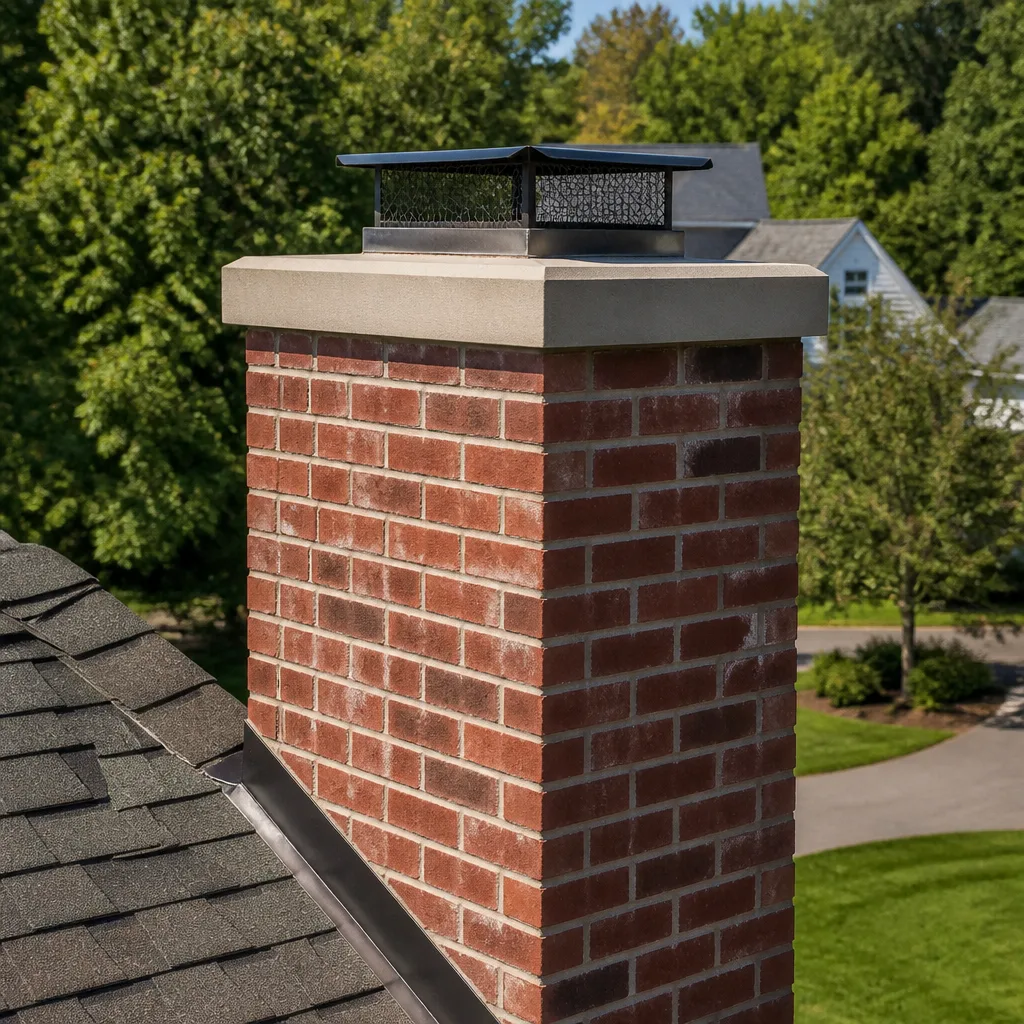
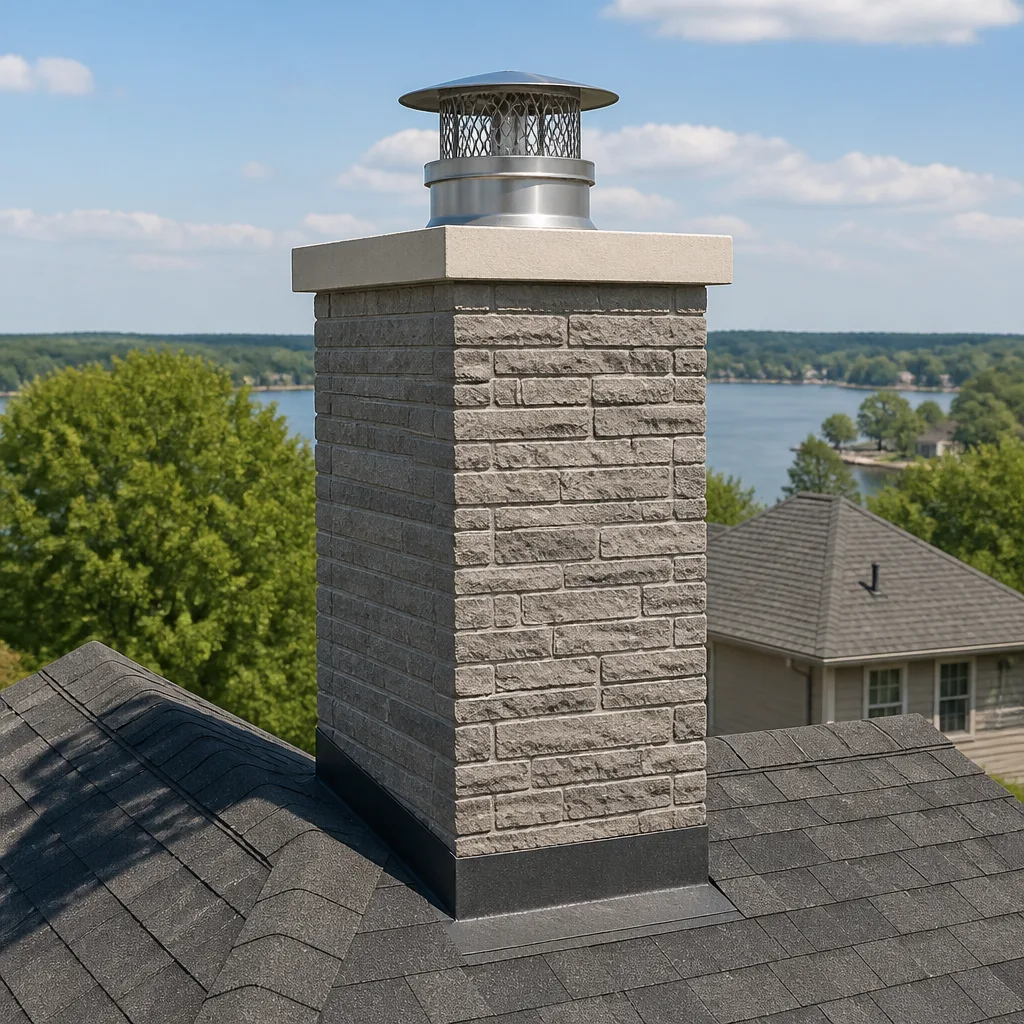
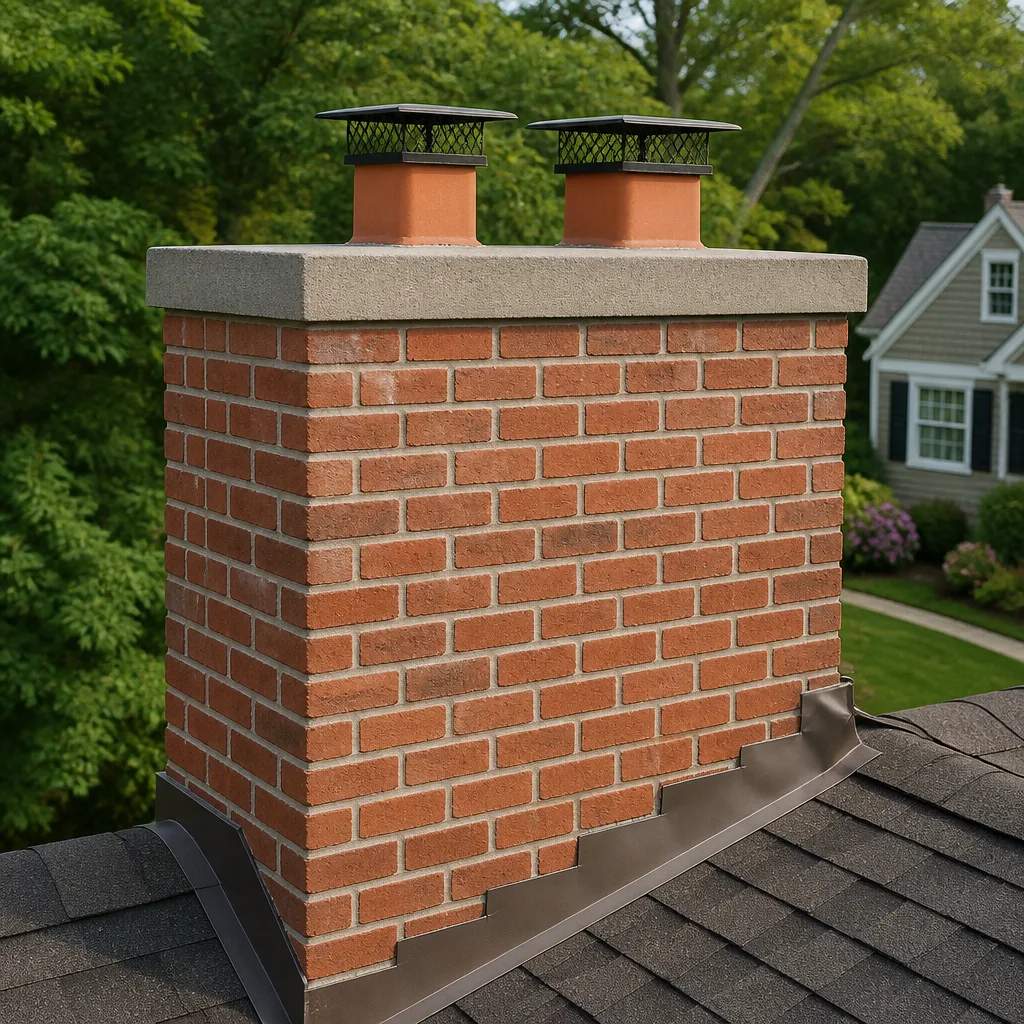
Level 1 sweep and inspection to the NFPA 211 annual standard - flue, crown, cap, and flashing checked and photographed
Chimney sweep logs do not sweep chimneys. They loosen some creosote - which then falls where a brush and vacuum still have to collect it.
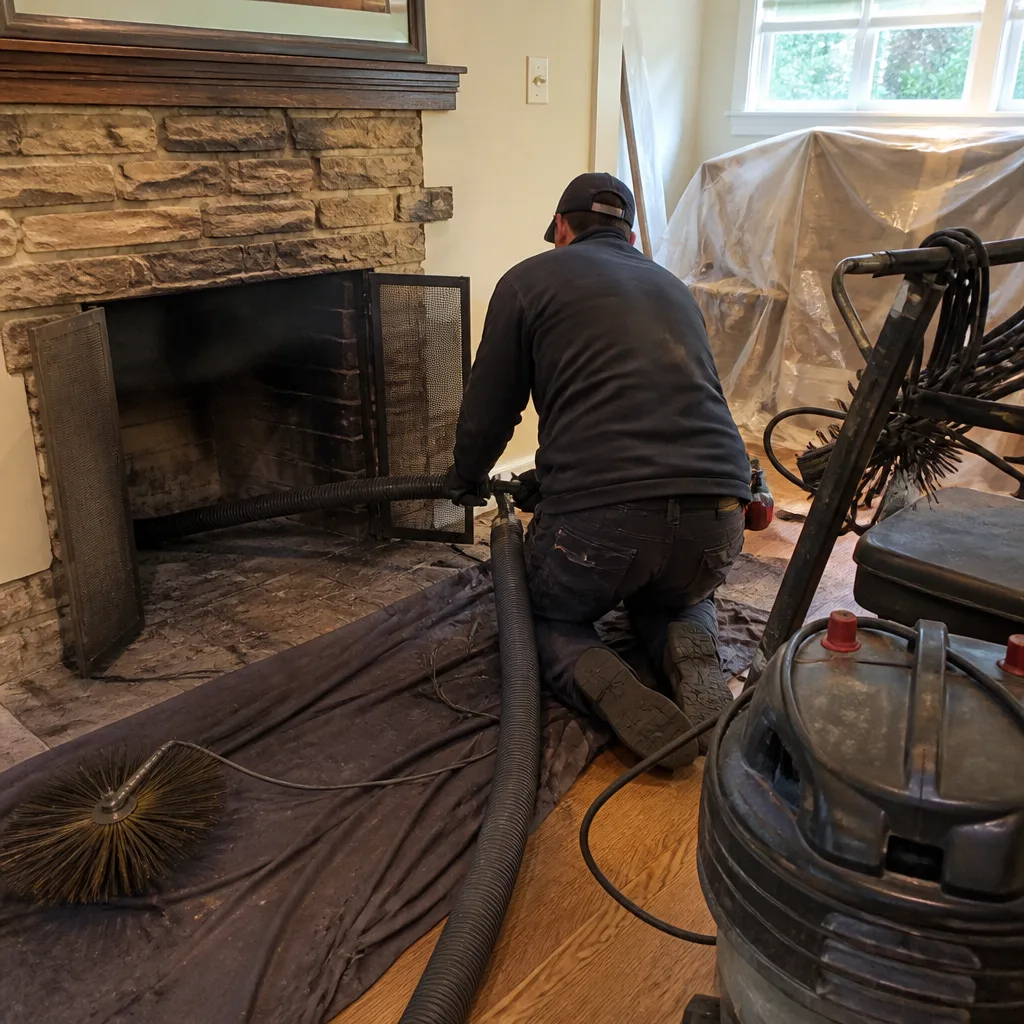 Before
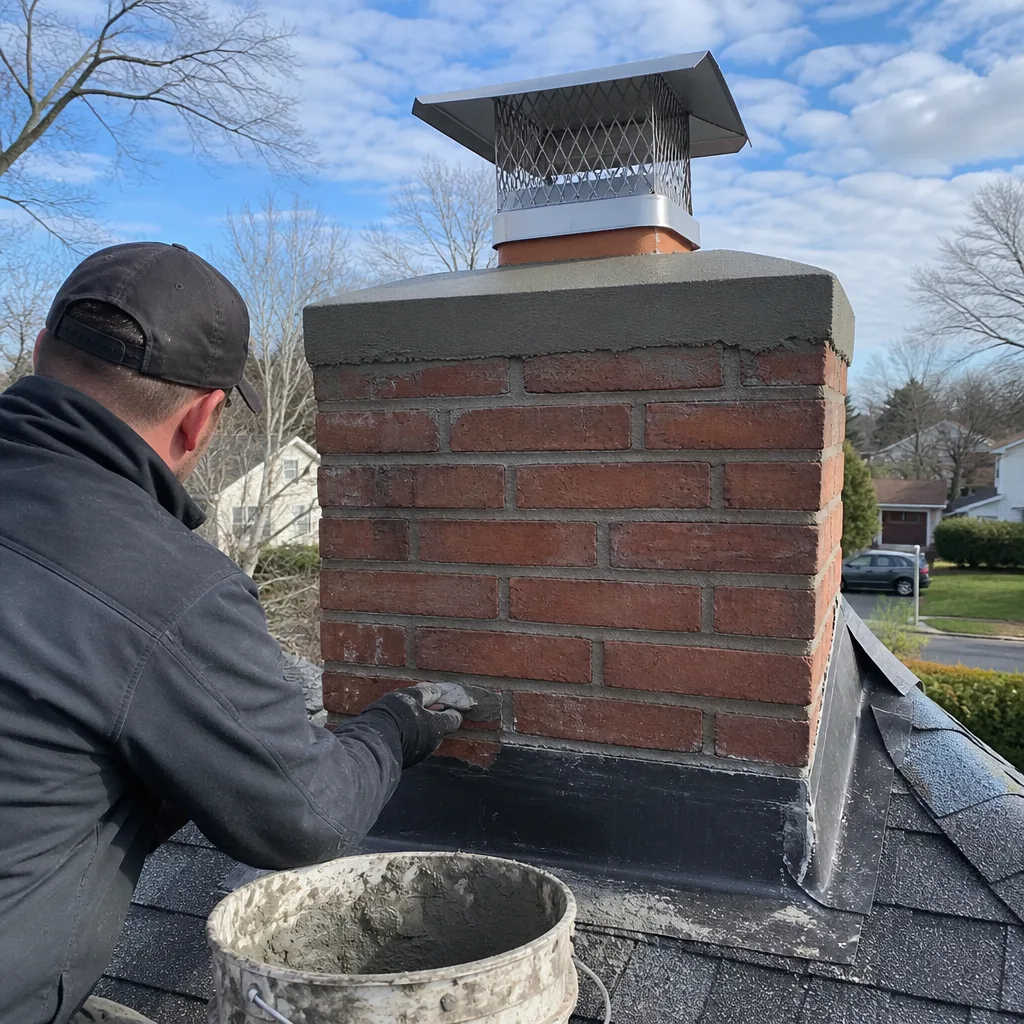 After
After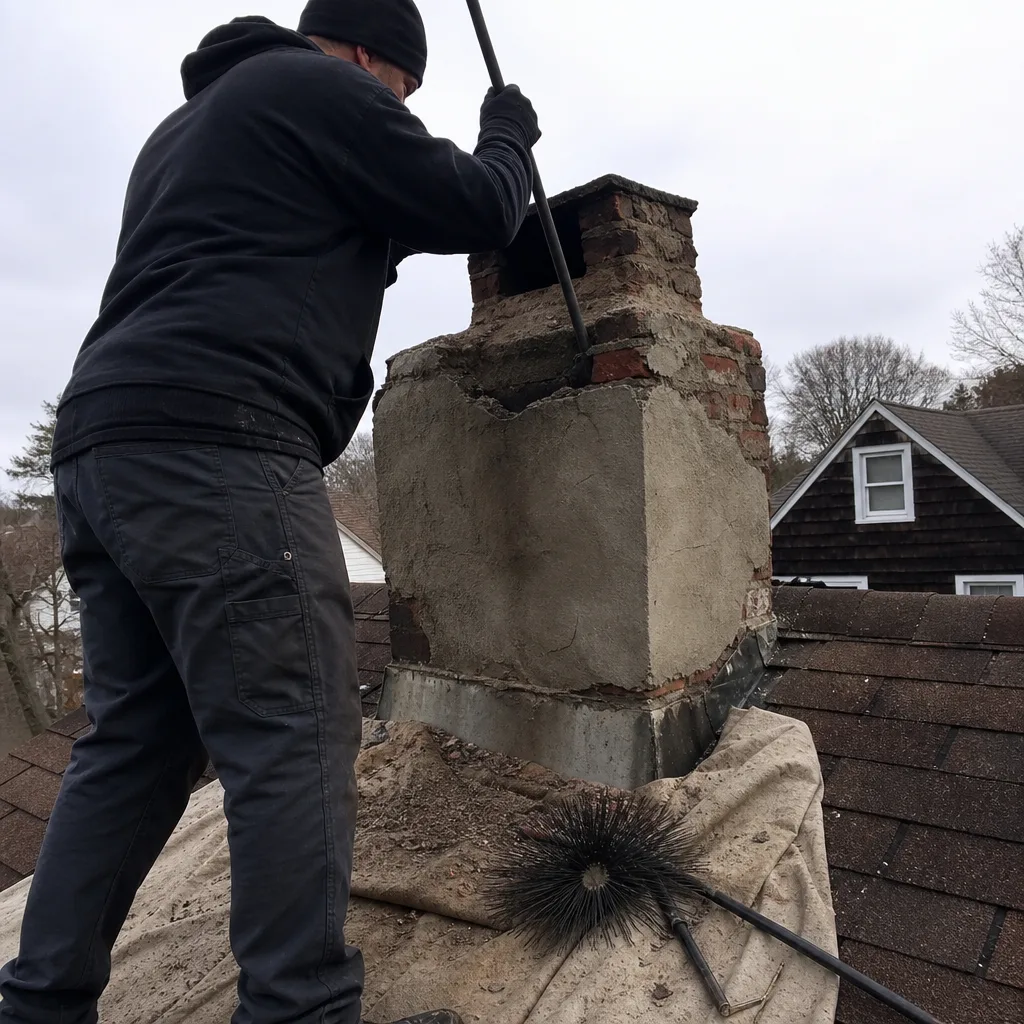 Before
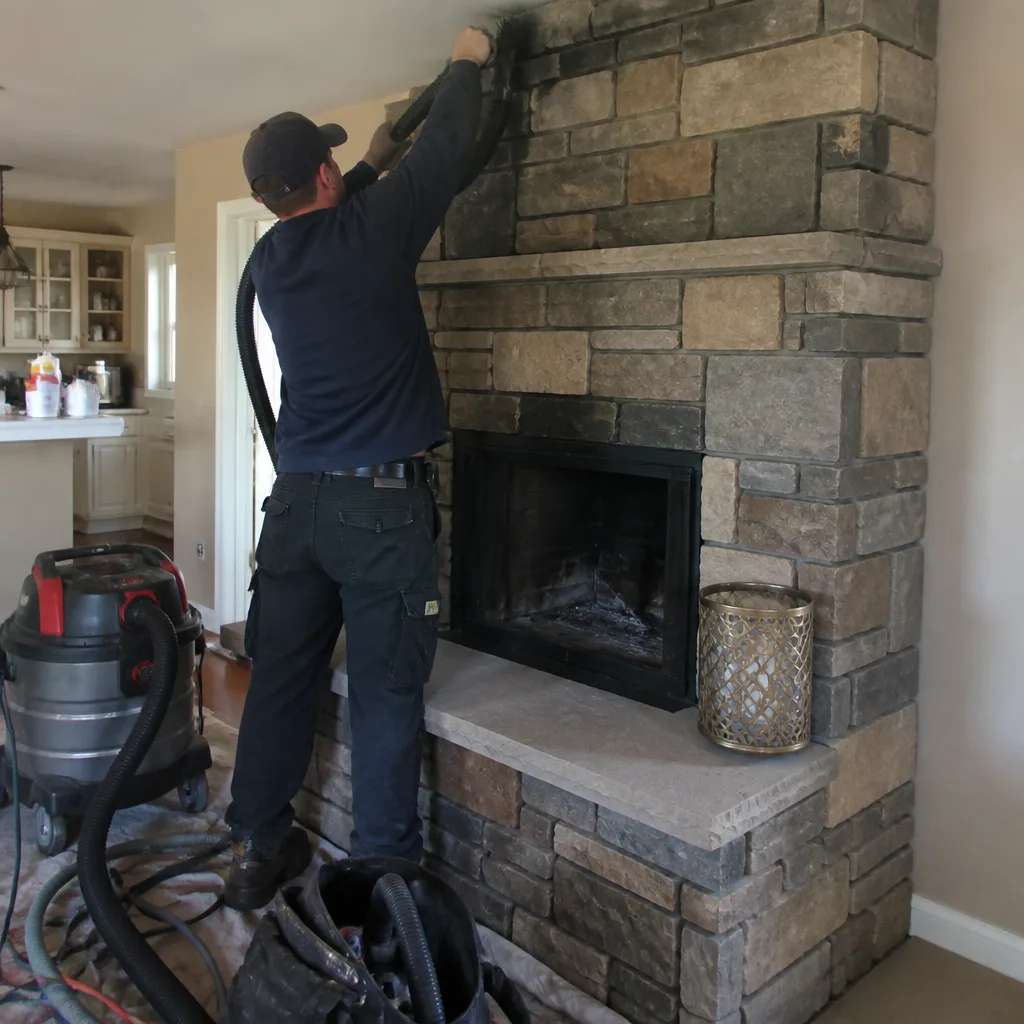 After
After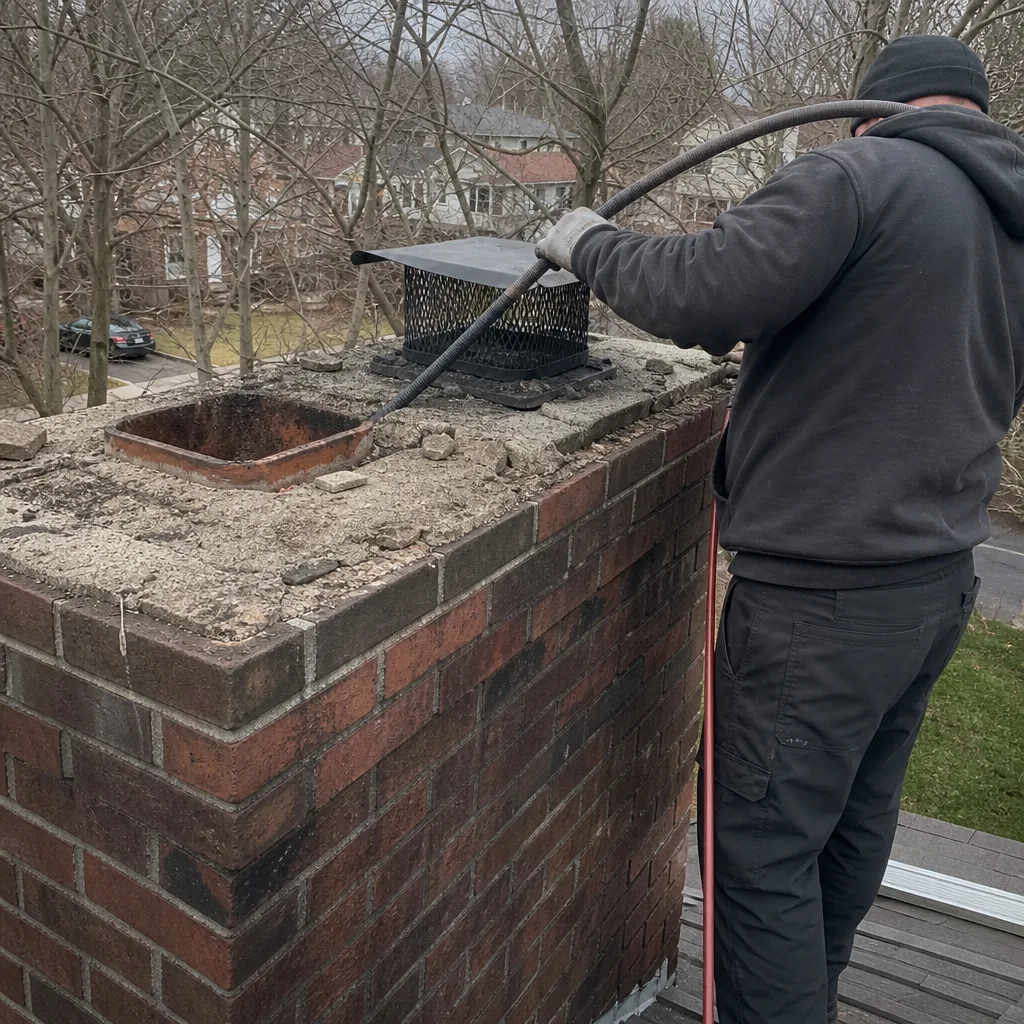 Before
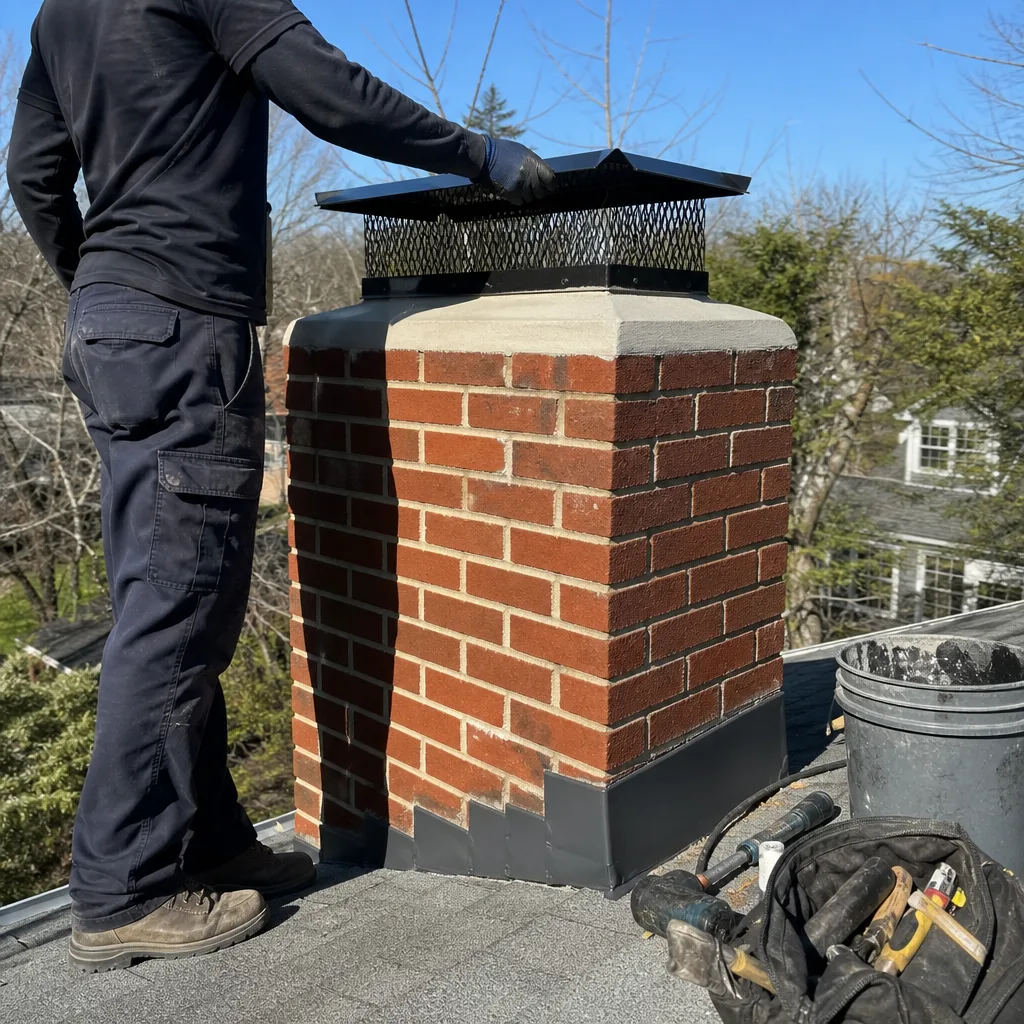 After
AfterChimney Cleaning Permits, Codes & Inspections in NY: What You Need to Know
Here’s something most Huntington homeowners don’t realize until it’s too late: the chimney sweep who cleaned your flue last fall may have handed you a repair quote that legally required a building permit, and neither of you knew it. In our 42 years of working on Long Island chimneys, we’ve seen unpermitted liner installations stall home sales, void insurance claims, and leave homeowners paying twice to have the same work done to code. This guide-along with our Complete Guide to Chimney Cleaning in Huntington-explains exactly where New York draws the line between routine chimney maintenance and regulated construction, what the Town of Huntington requires, and how to protect yourself when a cleaning reveals bigger problems.
Quick Answer
A standard chimney cleaning or sweep in New York does not require a building permit. However, structural repairs, flue relining, firebox rebuilds, crown replacement, and chimney cap installation typically do require permits under the New York State Uniform Code and local Town of Huntington amendments. A Level 2 NFPA 211 inspection, which includes camera evaluation of the flue interior, is the standard documentation buyers, sellers, and insurers expect for any chimney work beyond routine sweeping.
Table of Contents
- When Chimney Cleaning Needs No Permit
- When Repairs Trigger Permits Under NY Code
- Town of Huntington Specific Requirements
- NFPA 211 Inspection Levels Explained
- What ‘Up to Code’ Actually Means for Older Huntington Homes
- How Unpermitted Work Affects Insurance and Real Estate
- The Level 2 Inspection in Real Estate Transactions
- Common Mistakes to Avoid
- When to Call a Professional
- Frequently Asked Questions
- The Bottom Line
When Chimney Cleaning Needs No Permit
The good news first. A standard chimney sweep, the kind we perform hundreds of each season in Huntington, is classified as routine maintenance. No permit, no inspection, no paperwork beyond your receipt.
Here’s what falls squarely in the no-permit zone:
- Removal of soot, creosote, and debris from the flue using brushes, rods, and vacuums
- Cleaning of the firebox, smoke chamber, and damper assembly
- Basic operational checks of the damper and visual inspection of accessible components
- Application of creosote-modifying treatments or preventive sprays
The New York State Uniform Fire Prevention and Building Code, specifically Chapter 10 of the Residential Code of New York State, treats chimney sweeping as maintenance of an existing system rather than construction or alteration. This distinction matters because it means you can schedule a cleaning without navigating the Town of Huntington Building Department’s permit process.
Where homeowners get tripped up is when the sweep finds damage. A cleaning appointment turns into a repair estimate, and suddenly we’re talking about regulated work. The transition from maintenance to construction isn’t always obvious. Replacing a few cracked firebricks during a cleaning visit? That might stay under the maintenance threshold. Rebuilding the firebox with new mortar and refractory panels? That’s construction.
In Cold Spring Harbor and the surrounding Huntington areas, we’ve noticed a pattern: older homes with original masonry chimneys often need more than a sweep. The 1960s and 1970s construction boom on Long Island produced thousands of chimneys built with substandard flue liners or no liner at all. A routine cleaning reveals the problem, but solving it crosses into permit territory.
The key question to ask any sweep who recommends repairs: “Will this work require a building permit?” A contractor who hesitates or says no to clearly structural work is either uninformed or unwilling to do the paperwork. Either way, you’re absorbing the risk.
When Repairs Trigger Permits Under NY Code
New York State uses the International Residential Code as its base, modified by the Uniform Code Supplement and local amendments. For chimneys, the permit trigger points are specific and worth understanding before you approve any repair.
Work That Typically Requires a Building Permit
- Flue relining or liner installation. Installing a new stainless steel liner from DuraFlex or a cast-in-place system like HeatShield constitutes alteration of the venting system. The Building Department wants to verify proper sizing for the appliance being served.
- Firebox rebuild or reconstruction. Removing and replacing firebrick, refractory panels, or the structural throat of the fireplace. This affects combustion safety and clearances to combustibles.
- Crown replacement or major repair. Demolition and reconstruction of the concrete or stone crown at the chimney top. Minor crack sealing with crown coat products usually stays under the maintenance threshold.
- Chimney cap installation on masonry chimneys. While seemingly minor, this involves working at height and often requires fastening to the crown or flue tile. The Town of Huntington typically wants these documented, especially on homes in flood-prone areas near Huntington Harbor.
- Structural rebuilds above the roofline. Any reconstruction of brick, block, or stone courses, including partial teardown and rebuilding.
- Installation of factory-built chimney systems. Metal chimney installations for wood stoves or inserts require full permitting and inspection.
Work That Usually Does Not Require a Permit
- Damper repair or replacement (same size, same location)
- Smoke chamber parging with approved refractory materials
- Minor tuckpointing of mortar joints (less than 25% of total joints)
- Chase cover replacement on factory-built chimneys
- Waterproofing treatments and crown sealing
The 25% tuckpointing rule is a useful benchmark. In practice, most aging Huntington chimneys need more extensive mortar work. The salt air from Long Island Sound accelerates mortar deterioration, particularly in neighborhoods like Huntington Bay and Lloyd Harbor. We’ve repointed chimneys where every joint was powdery to the touch. That’s a permit job.
One more wrinkle: if your repair involves switching fuel types, say from wood to gas insert, the permit requirements multiply. Fuel conversions trigger both building and plumbing permits, plus inspection by the utility. We’ve seen homeowners in South Huntington assume a gas insert slips in like a new appliance. It doesn’t.
Town of Huntington Specific Requirements
The Town of Huntington Building Department enforces the New York State Uniform Code with local amendments that matter for chimney work. Understanding these specifics saves time and prevents rejected applications.
First, Huntington requires permits for all work listed in the previous section, with no exceptions for “minor” structural repairs. Some jurisdictions allow homeowners to skip permits for small jobs. Huntington does not. We’ve had customers in Elwood and Greenlawn learn this the hard way when they tried to sell and the title search revealed unpermitted crown work.
Second, Huntington operates under the Suffolk County Sanitary Code for certain aspects of chimney and venting work, particularly where appliances connect to oil or gas systems. This means your chimney contractor may need to coordinate with a licensed plumber or HVAC technician for the final connection inspection.
Third, the Town’s floodplain regulations affect chimneys in coastal zones. If your home sits in an AE or VE flood zone, any chimney work above the base flood elevation requires additional documentation. Homes near Coindre Hall, in the Huntington Harbor area, or along the north shore frequently fall into this category. The contractor must certify that the work won’t alter drainage or compromise the structure’s flood resistance.
Here’s the practical sequence for permitted work in Huntington:
- Contractor prepares construction documents showing existing conditions and proposed work
- Homeowner or contractor submits permit application to Town of Huntington Building Department, 100 Main Street
- Plan review period (typically 5-10 business days for residential chimney work)
- Permit issued; work may commence
- Rough inspection after structural or liner work is exposed but before closing
- Final inspection after completion; certificate of occupancy or compliance issued
The Building Department accepts applications online through the Town’s portal, but chimney-specific questions often require a phone call or in-person visit. We’ve found the inspectors knowledgeable about NFPA 211 standards, which smooths the process when our documentation is thorough.
One Huntington-specific note: the Town’s historic preservation overlay districts, including parts of the Old Town Green area, impose additional review for exterior chimney work visible from the street. If you own a home in these districts, factor in extra time for the Historic Preservation Commission’s approval.
NFPA 211 Inspection Levels Explained
The National Fire Protection Association’s Standard 211 defines three levels of chimney inspection. New York building officials and insurance adjusters reference these levels constantly. Understanding them helps you request the right service and interpret reports.
Level 1 Inspection
This is the visual examination performed during a standard cleaning. The technician inspects readily accessible portions of the chimney exterior, interior, and connecting appliances. No specialized tools, no camera, no roof access required beyond what safety permits. A Level 1 is appropriate when:
- The appliance or venting system hasn’t changed
- You’re continuing the same use as previous seasons
- No performance problems are reported
Most Huntington homeowners with functioning wood-burning fireplaces need only a Level 1 with their annual sweep. The limitation is clear: what can’t be seen can’t be assessed. A cracked flue liner hidden inside the masonry won’t show up.
Level 2 Inspection
This is where our chimney cleaning and sweep service in Huntington diverges from basic maintenance. A Level 2 includes everything in Level 1 plus:
- Video scanning of the flue interior with a camera system
- Inspection of attics, crawl spaces, and basements where chimney structure passes through
- Evaluation of clearances to combustibles in accessible locations
- Documentation with photos and written findings
Level 2 is mandatory when:
- The property is being sold or transferred
- The fuel type or appliance efficiency rating has changed
- Building damage (earthquake, chimney fire, lightning strike) has occurred
- New appliance installation is planned
In our 42 years, we’ve performed thousands of Level 2 inspections in Huntington. The camera reveals what no mirror-and-flashlight method can. We’ve found flue tiles shifted by freeze-thaw cycles, creosote glazing that indicates improper burning practices, and gaps between liner sections that vent carbon monoxide into wall cavities.
The climate here accelerates certain failures. Huntington’s freeze-thaw cycles, with temperatures swinging from single digits to the 50s within a week in late winter, stress masonry and liner materials. Our Level 2 reports note these conditions specifically, with photos dated and archived.
Level 3 Inspection
This is invasive inspection, requiring demolition of building materials to access concealed portions of the chimney system. Level 3 is reserved for:
- Suspected hidden hazards revealed by Level 2
- Investigation after a chimney fire or structural failure
- Legal or insurance disputes requiring definitive documentation
We’ve initiated Level 3 inspections perhaps two dozen times in four decades. It’s not a routine service. When we recommend it, something serious has been found or suspected.
What ‘Up to Code’ Actually Means for Older Huntington Homes
This is where homeowners get frustrated, and understandably so. You want a straight answer: is my chimney safe or not? The code doesn’t always provide one.
New construction must meet current code. Existing chimneys are governed by different standards. The International Existing Building Code, adopted by New York State, allows certain “like-for-like” repairs without full modernization. But the line between repair and improvement shifts based on the scope.
Consider a 1950s Huntington ranch with an unlined brick chimney serving a wood-burning fireplace. By current code, this chimney needs a listed liner properly sized for the appliance. But if you’re only repairing mortar joints and replacing a few firebricks, the Town of Huntington may approve the permit without requiring full liner installation. The chimney is “grandfathered” for its existing use.
Change the use, though, and grandfathering evaporates. Install a high-efficiency wood insert, and the chimney must meet current standards for that appliance. The tighter the appliance’s combustion system, the more critical proper venting becomes. We’ve seen homeowners in East Northport and Centerport install efficient inserts on old chimneys, only to have condensation destroy the masonry within two seasons.
The practical standard we apply: a chimney is “up to code” for its current use when it vents safely, maintains proper clearances, and shows no structural compromise. It is not “up to code” for a different use, a higher-output appliance, or conversion to a different fuel without appropriate modifications.
When we document a chimney repair in Huntington, our photos and verdict distinguish between these conditions. “Safe for continued wood-burning use with annual inspection” is different from “meets current code for new construction.” Both can be true statements. We tell you which applies to your chimney.
For homes in Northport, Lloyd Harbor, and other areas with pre-1980 construction, we frequently encounter chimneys built without liners, with single-wythe brick (one layer thick, not two), or with inadequate clearance to framing. These aren’t automatically condemned. They’re evaluated for their actual condition and use, with honest recommendations about what must change versus what can be monitored.
How Unpermitted Work Affects Insurance and Real Estate
This section could save you ten thousand dollars and six months of headache. Unpermitted chimney work is not a victimless paperwork omission. It creates documented, transferable liability.
Homeowner’s Insurance
Standard HO-3 policies cover sudden and accidental damage. They exclude damage from faulty workmanship, and they increasingly exclude damage from unpermitted construction. If a chimney fire originates in a relined flue that was never inspected by the Town of Huntington, your insurer may deny the claim based on the permit gap alone.
We’ve reviewed insurance denials where the adjuster’s first question was: “Was the work permitted?” The second question: “Was it inspected?” If both answers are no, the burden shifts to the homeowner to prove the work was not contributory to the loss. That’s expensive expert testimony, and you’re already rebuilding.
Carbon monoxide incidents carry even higher stakes. An improperly sized or installed liner can vent CO into living spaces. If that liner was installed without permit or inspection, criminal negligence becomes a real discussion.
Real Estate Transactions
New York’s Property Condition Disclosure Act requires sellers to report known defects and code violations. Unpermitted chimney work, once discovered, must be disclosed. Discovery typically happens during the buyer’s inspection, when a sharp home inspector notes newer work without corresponding permits on file.
The consequences cascade:
- Buyer’s inspector flags unpermitted chimney work
- Buyer’s attorney requests permit history from Town of Huntington
- Gap is confirmed; no certificate of completion exists
- Buyer’s lender may condition mortgage commitment on permit compliance
- Seller must either obtain retroactive permits (difficult, sometimes impossible) or reduce sale price to cover buyer’s cost to legalize
- Deal delays or collapses
In Huntington’s active market, we’ve seen this scenario repeatedly. A $400,000 sale hangs up over a $3,000 liner installation that skipped permits. The seller saved $200 on permit fees. It cost them fifteen times that in price reduction.
Retroactive permitting in Huntington is possible but painful. The Building Department requires opening the work for inspection, which means dismantling finished surfaces. If the original contractor is unavailable or uncooperative, you’re paying twice.
Title and Future Sale
Unpermitted work can cloud title if the Town of Huntington places a violation notice or lien. Even without active enforcement, the permit gap remains in the property record. Every future buyer’s attorney will find it. Every future sale will revisit the issue.
We document every permitted job we perform with permit numbers, inspection dates, and final approvals. Our customers receive a file copy. When they sell, they hand the documentation to their realtor. Problem prevented.
The Level 2 Inspection in Real Estate Transactions
If you’re buying or selling a home with a fireplace in Huntington, the Level 2 inspection deserves your focused attention, and our more guides & resources can help you navigate the process. It’s become standard practice in Suffolk County real estate, and for good reason.
For sellers, a pre-listing Level 2 inspection from our fireplace services team in Huntington provides documentation that heads off surprises. You learn your chimney’s condition before the buyer’s inspector arrives. You address problems on your timeline, with your choice of contractor, at negotiated rates. Most importantly, you disclose accurately and completely, eliminating the fraud risk of unknown defects.
For buyers, the Level 2 inspection reveals what no general home inspection can. Home inspectors are generalists. They’re not required to traverse roofs, operate camera systems, or evaluate flue liner condition beyond visible portions. We’ve reviewed hundreds of general inspection reports that state “chimney appears serviceable” while our Level 2 found cracked flue tiles, improper liner sizing, or missing mortar between courses.
The National Association of Certified Home Inspectors standards explicitly exclude chimney interiors from required inspection scope. Buyers who rely solely on the general inspection are flying blind on one of the home’s most dangerous systems.
Here’s what a transaction-ready Level 2 inspection should include:
- Complete video documentation of the flue interior, from firebox to crown, with narration
- Photos of exterior conditions, crown, cap, flashing, and clearances
- Written assessment of structural integrity, liner condition, and appliance compatibility
- Clear statement of recommended repairs, with priority ranking (safety vs. maintenance vs. improvement)
- Estimate for recommended work, with permit requirements noted
- Documentation suitable for disclosure filing or negotiation
In Huntington’s competitive market, some sellers resist pre-listing inspection, fearing they’ll discover expensive problems. They’re discovering them regardless, just at the worst possible moment. A $350 Level 2 inspection that finds $2,000 in needed repairs lets you price accordingly or fix proactively. The same discovery during contract negotiation typically costs $5,000 in concessions.
For buyers, we recommend making the Level 2 inspection a contract contingency, not a post-closing surprise. The cost is minor relative to the transaction. The information is essential for any home with a wood-burning fireplace, oil furnace venting through masonry, or gas appliance connected to an older chimney.
Common Mistakes to Avoid
- Hiring a sweep who can’t explain permit requirements. If your contractor doesn’t know when permits are needed, they probably don’t pull them. Ask directly: “Will this job require a Town of Huntington permit?” The answer should be immediate and specific.
- Assuming grandfathering covers everything. Existing chimneys are grandfathered for existing use, not for new appliances, fuel conversions, or structural changes. That distinction destroys more assumptions than any other in our experience.
- Skipping the Level 2 inspection before closing. General home inspections miss chimney interiors. Buyers in neighborhoods like Huntington Station and Melville have purchased homes with $4,000 liner replacements needed, entirely invisible from the living room.
- Accepting verbal assurance that work is “to code.” Code compliance for permitted work is documented by inspection certificates. Verbal claims are unverifiable and unenforceable. We provide written documentation for every permitted job.
- Ignoring flood zone requirements in coastal Huntington. Chimney work in AE and VE zones needs additional certification. Contractors unfamiliar with Town of Huntington floodplain administration have had permits rejected after submission.
- Permitting the sweep but not the repair. Some homeowners diligently permit major repairs but forget that the repair often starts with a cleaning that reveals the problem. The cleaning itself needs no permit, but the sequence matters for documentation.
- Assuming all liners are equal. We install DuraFlex and HeatShield systems specifically because they carry listings and approvals that satisfy New York State and Town of Huntington inspectors. Unlisted materials fail inspection, period.
When to Call a Professional
Call a chimney professional when your annual sweep reveals anything beyond surface soot, when you’re buying or selling a home with a fireplace, when you’ve changed or plan to change your heating appliance, or when you notice performance problems like smoking, odors, or visible deterioration. In Huntington’s climate, with salt air and freeze-thaw cycles, exterior masonry shows stress before interior problems become dangerous.
We recommend documenting every interaction. Photos you can see, a plain-English verdict you can understand, and permit paperwork you can file. That’s the standard we apply at Hearthstone Chimney Co., where Russell Haines and our team have served Huntington and surrounding communities for over 42 years. We answer the phone with a live person, 24 hours a day, provide no-hassle upfront pricing, and back every job with our 90-Day Done Right Promise in writing. If you’re uncertain whether your chimney needs permitted work or routine maintenance, call us at (631) 776-4075 for a free estimate. We’ll tell you exactly what you’re dealing with, what the law requires, and what it costs to do it properly.
Frequently Asked Questions
No. A standard chimney cleaning or sweep is classified as routine maintenance under the New York State Uniform Code and does not require a building permit in any jurisdiction, including the Town of Huntington. However, if the sweep reveals damage requiring structural repair, relining, or reconstruction, those subsequent repairs typically do require permits.
A standard Level 1 chimney sweep in the Huntington area typically runs between $200 and $350, depending on accessibility, appliance type, and the amount of creosote buildup. A Level 2 inspection with camera evaluation adds $150 to $250. We provide no-hassle upfront pricing before any work begins, and our $89 Seasonal Tune-Up offer covers basic cleaning and operational checks for qualifying systems. Call (631) 776-4075 for an exact quote - estimates are free.
You need a new liner when your existing flue is damaged, improperly sized for your appliance, or missing entirely. In Huntington’s older housing stock, particularly homes built before 1980, unlined or clay-tile-lined chimneys are common. Clay tiles crack from thermal shock and freeze-thaw cycles; we’ve replaced dozens in Northport and Lloyd Harbor where tiles had shifted or fallen, creating gaps that vent combustion gases into wall cavities. A Level 2 camera inspection shows exactly what condition your liner is in. Nothing is recommended without photo evidence you can see for yourself.
The National Fire Protection Association recommends annual inspection and cleaning as needed. For Huntington homeowners who burn wood regularly, that means sweeping every cord of wood burned, or annually, whichever comes first. Occasional fireplace users can sometimes extend to every two years if the Level 1 inspection shows minimal creosote. Oil and gas systems need less frequent sweeping but still require annual inspection for venting integrity. The salt air and humidity of Long Island accelerate corrosion and mortar deterioration, so we err toward annual service for most Huntington customers.
Skipped maintenance leads to creosote accumulation, which is combustible and causes chimney fires. It also allows minor damage to progress to major structural failure. In Huntington, we’ve rebuilt chimneys where years of neglected mortar joints let water infiltrate, freeze, and spall brick faces until the structure was unsafe. Carbon monoxide risks increase when liners crack or appliances vent improperly. The cost of prevention is always lower than the cost of remediation. Call (631) 776-4075 to schedule before burning season.
Yes, almost certainly. New York’s disclosure requirements and standard real estate practice in Suffolk County make unpermitted work a transaction obstacle. Buyer’s inspectors flag it, attorneys verify permit history, and lenders may condition funding on legalization. The Town of Huntington maintains permit records indefinitely. We’ve helped sellers obtain retroactive documentation, but it’s always more expensive and stressful than permitting properly the first time. If you’re uncertain about past work, we can evaluate and advise on the path to compliance.
The Bottom Line
Chimney cleaning in New York is simple: no permit, straightforward maintenance. The repairs that cleaning reveals are where complexity lives. Understand the line between sweeping and construction, demand permit documentation for any structural work, and never accept verbal assurance that something is “to code.” In Huntington’s varied housing stock, from 19th-century farmhouses to mid-century ranches, chimney conditions vary enormously. The only reliable approach is documented inspection, honest assessment, and work performed to standards that satisfy the Town of Huntington and protect your investment. Done right, and we stand behind it. That’s not a slogan. It’s how we’ve operated since 1984.
Written by Russell Haines, Owner at Hearthstone Chimney Co., serving Huntington since 2014.